How a Rodeo Night Inspired My Fiction Writing Process
Last night, I went to the rodeo at the New Mexico State Fair. I went to enjoy an evening with people I love, watch the rodeo, and hear the Turnpike Troubadours. But somewhere between the opening of the first chute and the final song of the night, I was also working.
That is what happens when a novelist goes to the rodeo while writing a rodeo novel.
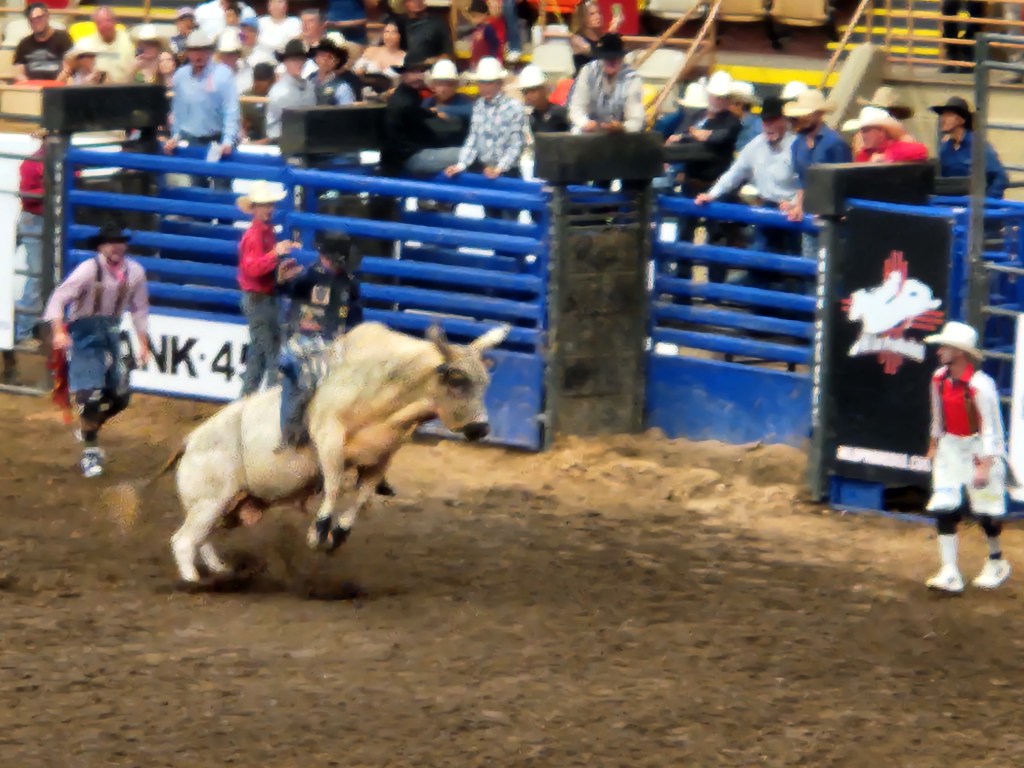
I watched the riders, of course, but I also watched the people around them. I noticed the work inside and around the chutes, the positioning of the pickup riders, the ropes, the arena dirt, and the movement that continues after the crowd’s attention shifts elsewhere. I listened to the sounds and paid attention to the atmosphere. I took photographs—not because every detail will appear in Midway, but because experiencing those details helps me understand the world in which my characters live.
Research has been part of my life for much longer than I have called myself a novelist.
I earned my bachelor’s degree in history, a field that taught me research was more than collecting facts. It meant finding evidence, evaluating sources, recognizing bias, placing information in context, and using what I found to build an argument. As an undergraduate, I won an award for Best Undergraduate Research. At the time, it marked the success of one academic project. Looking back, I can also see it as evidence of something that would shape nearly every part of my professional and creative life.
While earning my master’s degree in education, I researched the use of Native American Studies courses as a way to help improve Native American students’ test scores. That project asked me to connect research to the lives of actual students. It was not enough to understand a topic; I had to consider what the research might mean inside a classroom and how education could better serve students whose histories and perspectives have too often been pushed to the margins.
Later, while completing my master’s degree in American history, I wrote about the legacy of the Manhattan Project. That research required me to look beyond the familiar story of scientific achievement and the end of World War II. Legacy is complicated. It asks us to follow consequences over time, examine who was affected, and recognize that the meaning of an event depends partly upon whose experience we are considering.
My work as a teacher has kept me researching ever since.
Teachers research constantly, even if we do not always describe it that way. We verify information, locate primary sources, compare interpretations, search for the context students need, and decide how to make complicated subjects understandable without stripping away their complexity. We also have to anticipate questions—and students are very good at asking the one question that sends a teacher back to the books.
Researching fiction uses all those same habits, but it asks something different of me.
Historical and academic research begins with questions and evidence. Fiction research does too, but it also depends upon texture. What does a place sound like? How does the air feel? What would a character notice because of her experience—and what would she ignore because it is ordinary to her? Which details establish authenticity, and which ones merely demonstrate that the author did her homework?
Sometimes fiction research happens in books, archives, articles, maps, and photographs. Sometimes it happens during a road trip through the landscape where a story is set. It can come from conversations, music, personal memories, or studying a photograph closely enough to notice what I missed the first time. And sometimes it happens while sitting in an arena, watching a bull explode out of a chute.
The challenge is not putting everything I learn into the novel. Most research should remain invisible. Its job is to support the story, not interrupt it. Readers do not need every fact I discovered, but they should feel that the world continues beyond the edges of the page. The details that do appear must feel natural because the characters are living within that world, not delivering a research report about it.
My degrees taught me how to find information and evaluate evidence. Teaching taught me how to select what matters and explain it clearly. Writing fiction has taught me to take those skills beyond the archive—to listen, observe, imagine, and then return to the facts whenever imagination needs a firmer foundation.
So yes, last night was a wonderful evening at the rodeo and an incredible concert. It was also research.
The best kind rarely feels like work.


Leave a Reply