What I am Listening To
Music Posts
-
Riley Green ~ That’s Just Me
Sometimes a voice and an acoustic guitar are all you need. Sharing Riley Green’s acoustic version of “That’s Just Me” today—one I wanted to pass along.
-
Trying to Do All the Things
I have a habit of coming up with things I want to do while I am already doing something else.
I’ll be writing and remember the quilt fabric waiting for me. I’ll be looking through photographs and start thinking about putting some of them up for sale. I’ll sit down to read and remember a space I wanted to organize. Somewhere in there, I also need to spend time with my family, take care of my health, and go to bed at a reasonable hour.
The reasonable bedtime sometimes loses.
I have been thinking about balance lately. Between teaching, writing, family, hobbies, and health, there are a lot of things asking for a piece of my day. And the tricky part is that I actually want to do most of them.
Teaching takes a substantial amount of my time and energy during the day, but I try hard to leave the work at school. Other than my weekly lesson plans, I do very little schoolwork at home. I may still think about my students after the day ends, but I want my evenings and weekends to have room for the other parts of my life, too.
Then there is my author life. Writing the books is something I love, but publishing them has added a whole collection of other jobs. There are posts to write, readers to connect with, bookstores to contact, and a website that always seems to give me another idea.
I can sit down to work on one thing and find three more things I would like to try.
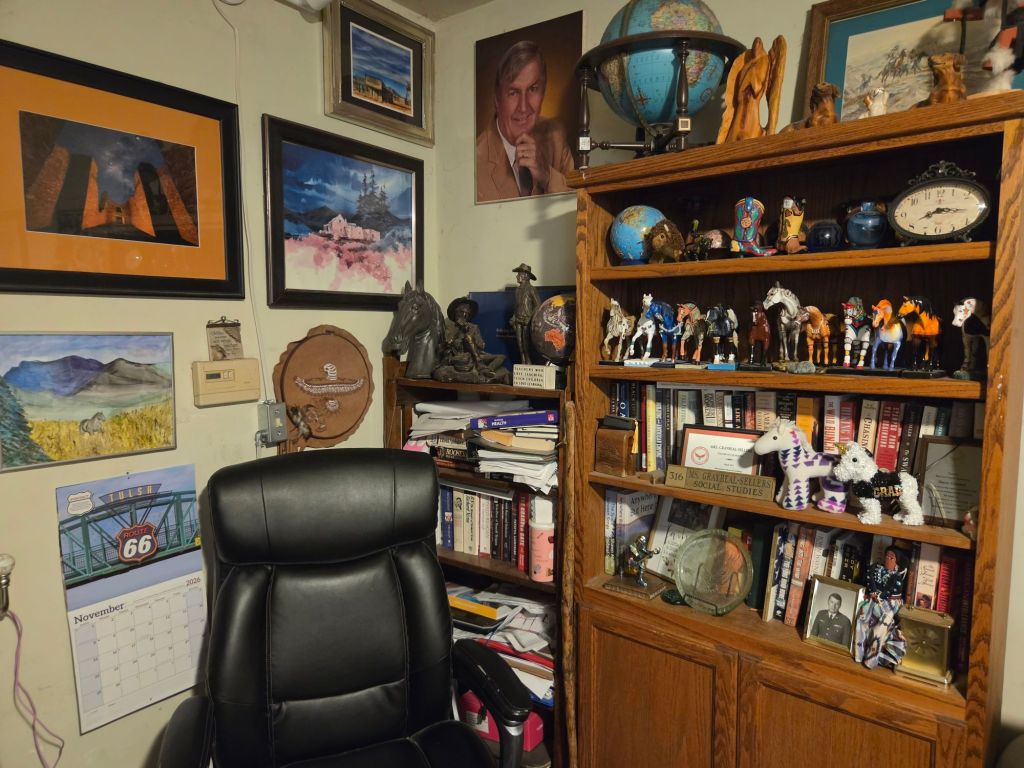
My hobbies work much the same way. I love photography, quilting, cooking, reading, and wandering through thrift stores and estate sales. I enjoy learning. I finished a master’s degree in history and promptly started thinking about what I wanted to study next. Apparently, my brain did not get the memo about taking a break.
These things make my life richer. They also require time, and I keep discovering that being excited about a project does not magically create another afternoon in which to do it.
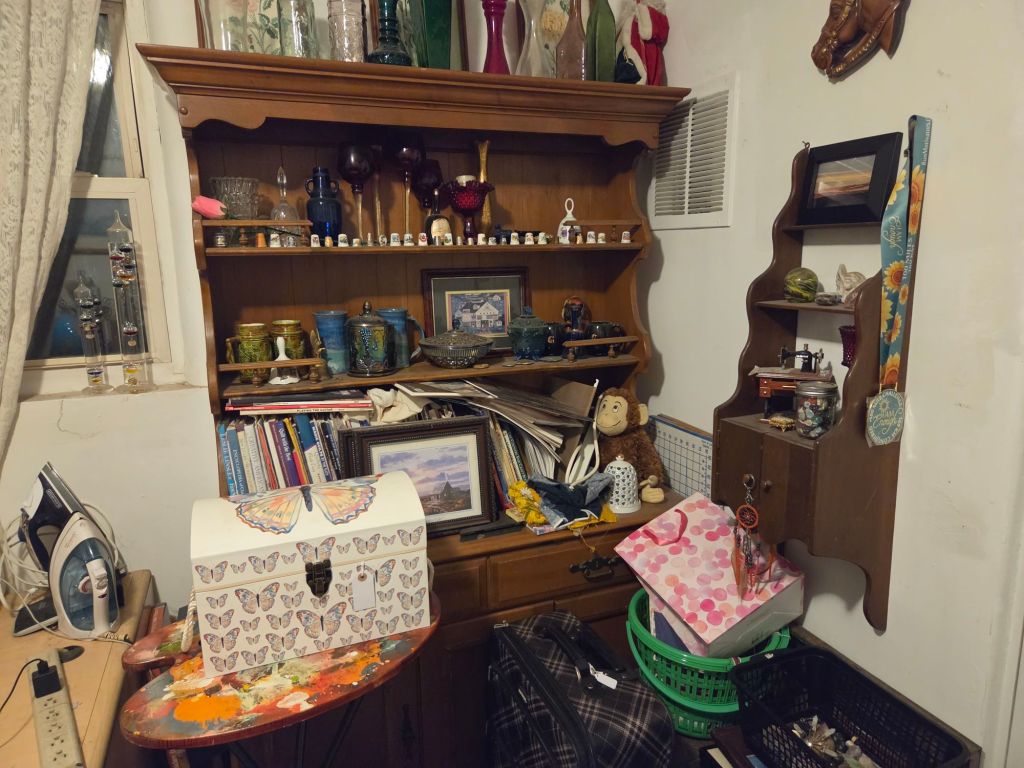
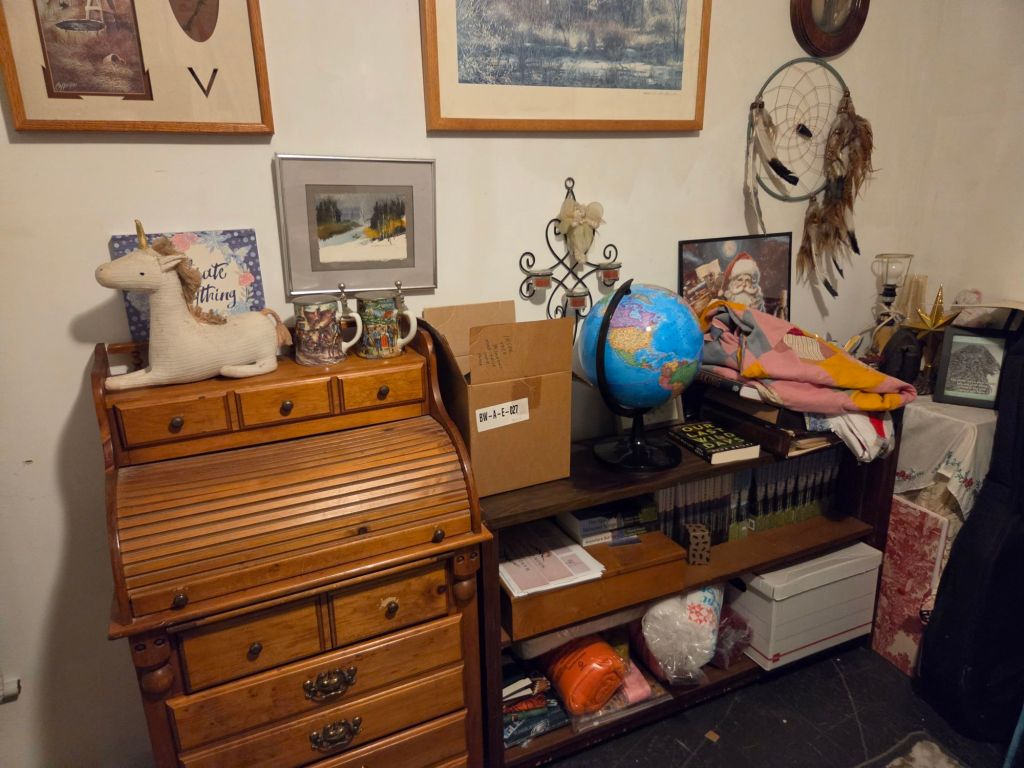
And then there are my spaces. Books, fabric, photographs, collections, and supplies for the things I love doing all need somewhere to live. Organizing them takes time, too. Sometimes I start sorting and rediscover something I want to work on, which probably explains why organizing can take me a while. There are only so many free hours, and I can easily spend them making room for a project before I ever get to the project itself.
Then there is time with Len. Dinner together, a conversation, going out, or just a quiet evening at home. I want to make room for us to enjoy being together without always having something I need to accomplish.
And there are our kids and grandkids. I spend time with them when I can, working around their schedules and mine. This fall has included football games, and my grandson’s team made the playoffs. That means more football to look forward to! My oldest grandchild is already a senior in high school, which hardly seems possible. It makes me especially aware of how quickly these years go.
And my health needs a place in all of this.
It is easy to get absorbed in something and decide I will exercise later, or stay up a little longer because I am finally making progress. Eating well takes attention, too. When I am busy or tired, grabbing fast food is easy. So is reaching for candy or a pastry, especially when there are doughnuts sitting in the staff lounge. I am trying to be more thoughtful about what I eat and make room for choices that help me feel better.
One small thing that has worked for me is reading on my recumbent bike. I get into a book, and suddenly I have ridden longer than I intended. Two things I wanted to make time for fit together nicely. I appreciate that kind of cooperation from my schedule.
I am also trying to get more comfortable with letting projects wait.
The quilt can still be there next weekend. An idea for the website can stay an idea for a while. Taking a few days away from a manuscript does not erase the work I have already done. I know all of this. Remembering it when I want to do everything is another matter.
Some days, school gets most of my energy. Other days, I have enough left to write, cook something good, or spread fabric across the table and figure out what comes next. Some evenings are for football or family. Others, I am happy to sit with Len and read.
I am beginning to think balance has to leave room for those differences. I cannot give every part of my life equal attention every day. I can keep paying attention to where my time is going and whether I am making room for the things and people I care about.
I will probably always have more ideas than available hours. There will be another book I want to write, another quilt I want to make, and another stretch of road I want to photograph.
For now, I am working on enjoying what I am doing without mentally assigning myself three more jobs before I finish.
And occasionally going to bed on time.
-
Between the Books
Some evenings I sit down at my computer with every intention of getting something done, and then a song comes on.
I listen. Then I play another one. Before long, I’ve spent an entire evening following the music wherever it wants to go. Sometimes that takes me straight to Bear and Becky. Sometimes it brings back a memory I haven’t thought about in years. And sometimes I just really need to hear that guitar again.
There are worse ways to spend an evening.
Life has been full lately. Teaching takes up a considerable portion of my days, and Midway Saints has a habit of occupying my brain well beyond the hours I actually spend working on it. There are quilts waiting to be made, places I want to explore, books stacked up to read, and usually something happening in my kitchen.
If you’ve wandered around this website, you’ve probably noticed that all of those things have found their way here. You might arrive looking for a novel and end up with a recipe, a photograph from Colorado, or a song I’ve been playing on repeat.
That feels about right.
When I think about what I want this space to be, I want it to feel like spending a little time with me. Books are a big part of that. So are the mountains, the music, the fabric piled up while I decide what belongs in a quilt, and whatever I’ve decided to cook. This website is the outward expression of a life that has quite a few things going on at once.
The kitchen deserves a fair amount of space in that picture. I cook a lot, and I’m good at it. I enjoy feeding people, making something worth sitting down to eat, and seeing what I can do with what I have on hand.
Sometimes that means a tried-and-true recipe I know will turn out well. There’s comfort in making something familiar, especially at the end of a busy day. Other times, I’m looking through an old family recipe, thinking about the person who made it and remembering when I’ve eaten it before. Those recipes can bring people and places back to me in a very immediate way.
And then there are the days I want to explore. A recipe catches my attention, an ingredient gives me an idea, or I decide to try something I haven’t made before.
Following a recipe exactly is another matter.
I tend to read it, consider its suggestions, and then make a few decisions of my own. I might change the seasoning, substitute something, or decide it needs a little more of this and a little less of that. Sometimes I’m working from experience. Sometimes I’m curious. By the time dinner is ready, the recipe and I may have taken slightly different routes to the table.
I also have a husband who starts cleaning as soon as the meal is done. Len keeps the dishes handled, which is a pretty wonderful arrangement for someone who enjoys making a mess in the kitchen as much as I do.
That curiosity follows me out the door, too. I love exploring—taking a road I haven’t traveled, getting out on a trail, or seeing what’s around the next bend. Give me mountains, an interesting stretch of highway, and time to stop, and I can keep myself entertained for quite a while.
Photography lets me bring some of those adventures home. Looking through my pictures takes me back to where I was standing, what caught my attention, and what was happening around me. A photograph of a road or a mountain can bring back an entire day: the detour, the weather, the people I visited, or the reason I pulled over in the first place.
Sharing those photographs here gives me a chance to revisit the places I’ve been—and bring you along for a little of the trip.
Some of my exploring happens through history. I have a master’s degree in history, and my curiosity about the past has given me plenty to pursue long after finishing the degree. There is always another place, another question, or another account I want to spend time with.
Right now, I’m getting ready for a deep dive into the Silk Road. On the surface, this is for my students. There will be lessons involved, and they will certainly benefit from the research.
But I’m also doing it because I’m fascinated by that part of the world and the idea of traveling through it. I want to spend time imagining those journeys: the distances, the landscapes, the places people stopped, and the encounters along the way. What would it have felt like to arrive somewhere so far from home? What would you notice? What would you carry back with you?
This is one of the advantages of teaching history and geography. Sometimes I get to call following my own curiosity lesson planning.
My reading habits wander just as much. I can go from a history book to a romance, pick up a thriller, and then follow someone else across unfamiliar country in an adventure travel story. There are too many interesting things to read for me to stay in one section of the bookstore.
Sometimes I want to learn. Sometimes I want suspense. Sometimes I want to fall in love with a couple of fictional people or see a part of the world through someone else’s eyes. Whatever I’m reading, I want something that keeps me turning pages.
And I’m very good at telling myself I’ll stop at the end of the chapter.
Morning-teacher me has some opinions about how well evening-reader me honors that agreement.
Then there’s the music.
Anyone who has spent much time here knows how much it matters to me. I can hear a song and immediately know where it belongs in a character’s life. Other times, I have to sit with it a while before I understand why it caught my attention. A line, a voice, or an acoustic version of a song I already love can keep me listening long after I meant to move on to something else.
I’ve spent plenty of nights doing exactly that. Sitting here, listening, letting my mind wander. Sometimes I share a song because I want someone else to hear what I hear in it. Sometimes I’m still trying to figure that out myself.
And somewhere in all of this, there’s usually a quilt in progress—or fabric waiting for me to decide what it’s going to become. I love choosing the colors and watching the pieces come together. Finishing one takes time, especially with everything else competing for my attention, but there’s a lot of satisfaction in making something someone can wrap up in.
There are jigsaw puzzles, too, with their own ability to turn “just a few minutes” into a much longer commitment. Apparently, one more piece and one more chapter work on the same part of my brain.
I also enjoy drawing and painting when I can persuade some of my creativity to wander away from the book for a while. Lately, the characters have been fairly possessive of it. Still, I like having other ways to make something, and I’m always glad when I give myself time to pick up a pencil or a paintbrush.
I also have a hard time resisting a good estate sale or thrift store. I love wandering through and seeing what catches my eye—fabric, something for the kitchen, an interesting piece for the house, or something I had no idea I needed until I found it. There’s a little exploring involved in that, too, and I enjoy imagining the history of the things people have kept. Even the wrap I’m wearing in the photograph with this post was a thrift-store find.
Through all of this, there’s time with my family. With four children and thirteen grandchildren, there are plenty of people to love and plenty of reasons to put a project down. A football game, a visit, a meal together—those are things I want room for, too. The quilt can wait a little longer. So can the chapter.
I make room for all of it as best I can. Some projects wait longer than I’d like. Some evenings turn out very differently from what I planned. I’m learning to appreciate the ones where I finish a chapter, make a good meal, find a song, or simply enjoy the company of the people I love.
There’s a particular happiness, too, in knowing that while I’m here reading someone else’s book, someone somewhere might be reading mine. A paperback heading to a new home or a few hundred pages read is a welcome reminder that the stories are out there having lives beyond my desk.
So if you’ve wondered how the books and recipes and quilts and music all ended up in the same place, this is how. They’re the things I keep coming back to, and the things I want to share.
I hope you’ll wander around a little. Find a story, try a recipe, revisit an adventure with me, or listen to a song. I’ll probably be here debating whether I have time for one more chapter.
Or changing something in a recipe.
Or playing that guitar part again.
-
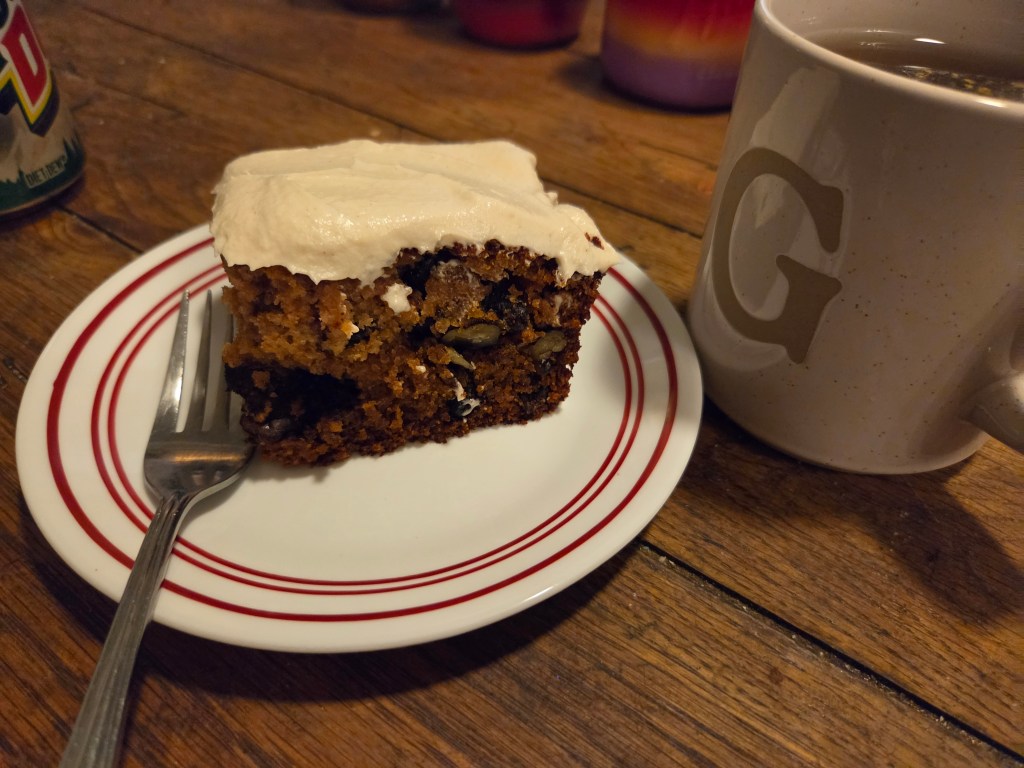
Grandma Graybeal’s Applesauce Cake
Some family recipes leave a few things to the imagination. This one calls for “½ cup fat,” with no further explanation. I went with melted butter.
The recipe is in my Grandma Viola’s handwriting, titled “Mom’s Applesauce Cake,” so I believe it came from my great-grandma Graybeal. Aunt Mary Anna and Aunt Sus compiled the family recipes, and one of them likely added “Grandma Graybeal” underneath to identify whose recipe it was.
I baked it yesterday, substituting walnuts for the raisins and adding a simple cream cheese frosting. No eggs, and no elaborate instructions. The original simply tells you to let the applesauce and baking soda foam, add the flour and fat, and bake.
Ingredients
- 1 cup sugar
- 1 tablespoon ground cinnamon
- 1 tablespoon ground cloves
- 2 teaspoons baking soda
- 1½ cups unsweetened applesauce
- 2½ cups all-purpose flour
- ½ cup butter, melted
- 1 cup chopped walnuts—or raisins, as the original calls for
- Cream cheese frosting, optional
Directions
- Preheat the oven to 375°F. Grease a 9 × 11-inch baking pan.
- Mix the sugar, cinnamon, and cloves in a small bowl.
- In a large mixing bowl, stir the baking soda into the applesauce and let it foam.
- Stir in the sugar and spice mixture, flour, and melted butter until combined. Fold in the walnuts or raisins.
- Spread the batter evenly in the prepared pan.
- Bake for approximately 45 minutes, or until a toothpick inserted into the center comes out clean.
- Cool completely before topping with cream cheese frosting, if desired.
Family recipe note: The cinnamon and cloves are measured in tablespoons, just as written in the original. My version uses melted butter for the “fat” and walnuts in place of raisins.
-
Crockpot Red Chile Pork
As the weather starts cooling down, this is one of those meals I like to put in the crockpot and let cook all day. Tender pork in red chile, served over fried potatoes with cheese and sour cream—it’s a pretty good way to end a chilly day.
I originally shared this recipe back in 2011, but the memory that went with it is even older. More than twenty years ago, I made a batch of red chile pork for tamales and never found the time to actually make the tamales. My daughter and I ate a LOT of red chile pork sandwiches instead. No complaints about the sandwiches, though!
These days, I make this pretty regularly for Len and me. I usually cut the pork into small pieces and brown it before putting it in the crockpot. It’s still wonderful for tamales, but over fried potatoes is my favorite way to serve it.
And for readers who know Mama Calderone, I’m pretty sure this is something you’d find cooking in her kitchen, too.
Ingredients
- One 3–5-pound pork roast, cut into small pieces
- One container of prepared red chile, hot or your preferred heat level
- Garlic, to taste
- Salt, to taste
- Onion powder, to taste
- A little oil for browning, as needed
For serving
- Fried potatoes
- Shredded cheese
- Sour cream
Directions
- Heat a little oil in a large skillet. Brown the pork in batches, then transfer it to the crockpot.
- Add the red chile, garlic, salt, and onion powder. Stir to coat the pork.
- Cover and cook on low until the pork is tender and pulls apart easily. My original whole-roast version cooked for 8–10 hours; with smaller pieces, start checking sooner.
- Taste and adjust the seasonings before serving.
- Spoon the pork and red chile over fried potatoes. Top with shredded cheese and a dollop of sour cream.
You can also serve it with pinto beans and warm tortillas, tuck it into sandwiches, or use it as tamale filling—if you get around to making the tamales!
-
A Little of Grandma’s Table
When I decided to make a pot roast for Sunday dinner, I knew what I wanted alongside it: the soft homemade dinner rolls Grandma Viola used to serve.
Before I went looking for the recipe, I checked with Aunt Mary Anna and Uncle Frank to make sure they wouldn’t mind me sharing some of Grandma’s recipes on the blog. Aunt Mary Anna said she didn’t mind at all. Uncle Frank said, “Sure, keep grannyma’s memory alive.”
That stayed with me as I cooked today.
Grandma Viola was one of the most inspiring people in my life. She kept the farm going and cared for the children while my grandfather, Stanley, worked as a miner in Utah. When he died in a plane crash, my dad was eight years old. Grandma was left with six children, ranging in age from five to fourteen: four girls and twin boys.
She raised her children, took care of the home, and worked outside the home to keep everything together. I think about how much that must have required of her, especially now that I’m old enough to understand more of what she carried.
Her bread recipe made eight loaves at a time. With six growing kids to feed, I suppose anything less wouldn’t have lasted very long. She made cinnamon rolls and jelly, too. She milked the cows, and the milk and butter were fresh. She knew every one of her cows, who their parents were, and which calves belonged to them.
Some of my fondest childhood memories are of being at her house with my cousins. I remember drinking fresh cow’s milk from aluminum glasses and eating homemade bread with butter and jam. That is still one of my favorite things to eat. Something so simple can bring back so much.
I couldn’t find a separate dinner roll recipe, although Aunt Mary Anna told me Grandma used her bread dough. Eight loaves’ worth was a little more than Len and I needed, so today I tried another recipe and made a dozen rolls. They were good, though they weren’t quite the texture I remembered. Sometime, I’ll scale down Grandma’s recipe and try again.
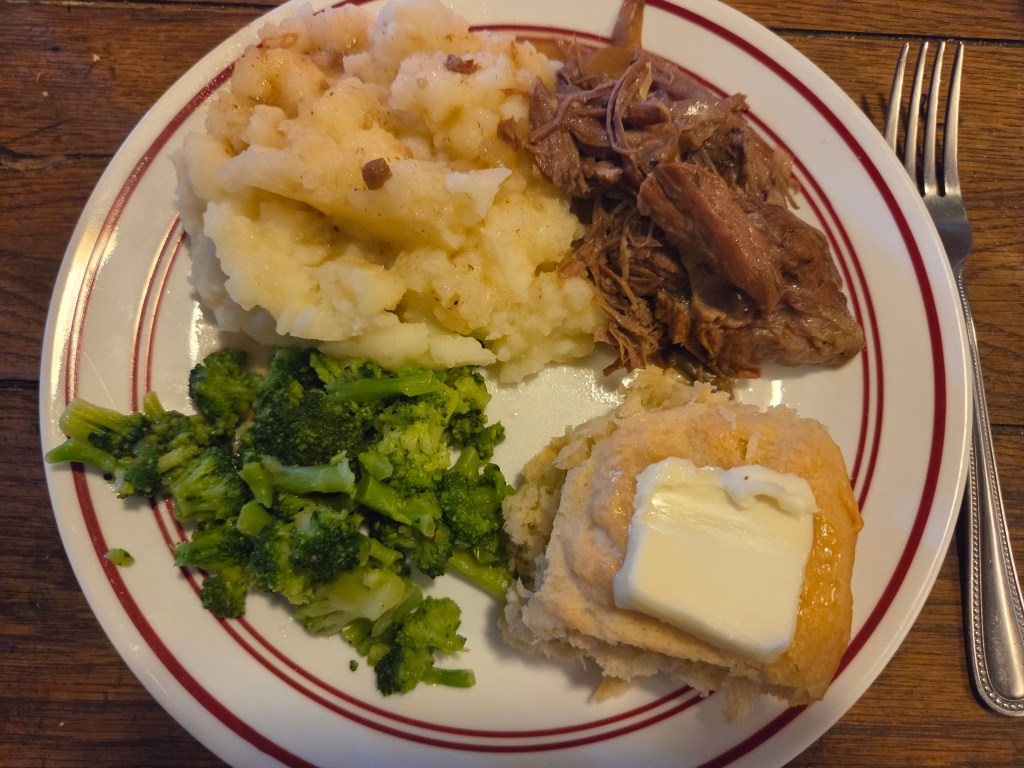
Tonight we had pot roast, mashed potatoes, homemade rolls, and garlic butter broccoli. As I put dinner together, I kept thinking about growing up and all of us sitting around the table, eating together. I wanted those rolls because I remembered how they tasted, but I also remembered where I ate them and who was there.
My memories of Grandma aren’t all of her working. In the afternoons, she would sit down to watch her shows and crochet. I have one of her afghans, and I still snuggle under it. After all these years, something she made with her hands is still keeping me warm.
I also have a couple of her crochet patterns that I’m going to share with Robin, the crocheter in my family. And I have recipes that I’ll share here over time, once I sort through them—and perhaps do a little math on those eight loaves of bread.
Today, though, I mostly wanted to write about Grandma.
I wish I could sit at her table again, with my cousins nearby, an aluminum glass of milk, and a slice of her homemade bread spread with butter and jam. Tonight’s dinner brought those memories close, and I’m glad Uncle Frank reminded me to share them.
-
Traveling Alone ~ Jason Isbell
Today’s music: “Traveling Alone” by Jason Isbell. Some songs feel like a whole novel tucked into a few minutes—the miles, the weariness, and the longing for someone to share the road. This is one of them.
-
Molasses Spice Cookies
These molasses spice cookies are a fall favorite—the kind of baking that fills the kitchen with the warm scent of cinnamon, ginger, nutmeg, and cardamom. With their sugar coating and rich molasses flavor, they’re just right for a cool afternoon with a cup of coffee or tea.
They’re also a favorite of my Aunt Mary Anna’s. My cousin, Brenda messaged me yesterday asking for the recipe so she could make a batch for a family friend. That was the perfect excuse to give it a home on the new website, where we can all find it when the fall baking mood strikes!
Ingredients
- 2 cups flour
- 1 stick butter (½ cup)
- ½ cup sugar, plus additional sugar for rolling
- ½ cup molasses
- 1 egg
- 2 teaspoons baking soda
- 1½ teaspoons cinnamon
- 1 teaspoon cardamom
- 2 teaspoons ginger
- 1 teaspoon nutmeg
- ¼ teaspoon salt
Instructions
- Preheat the oven to 375°F.
- Cream the butter and sugar together. Add the molasses and egg, mixing well.
- Add the baking soda, cinnamon, cardamom, ginger, nutmeg, and salt. Mix well.
- Gradually add the flour, mixing until fully combined.
- Form the dough into 1-inch balls and roll each ball in sugar.
- Place on a baking sheet, leaving room between the cookies.
- Bake for 8–10 minutes.
-
Southern Gothic ~ Dan Tyminski
I’ve loved Alison Krauss and Union Station for years and followed their members into their solo work. Lately, Tyminski’s “Southern Gothic” keeps finding me on YouTube—cool, creepy, and the perfect soundtrack to my current Southern Gothic read.
-
Southwest Eggs in a Basket
Eggs in a basket have been a favorite of mine since I was a kid. They’re comfort food—simple, familiar, and always good. But I love to dress them up a little, too.
Sourdough is especially good for this version. I add shredded cheddar after flipping the bread, let it melt while the eggs finish cooking, and spoon salsa over the top. A little Southwest flavor for an old favorite.
Ingredients
- 2 slices of bread—sourdough is great
- 2 eggs
- Butter
- Black pepper, to taste
- Shredded cheddar cheese
- Salsa
Directions
- Cut a hole in the center of each slice of bread with a biscuit cutter or the rim of a glass. Save the centers to toast alongside the bread.
- Melt a little butter in a skillet over medium heat. Add the bread and the cutout centers.
- Crack an egg into each hole and sprinkle with black pepper. Cook until the bottom of the bread is golden and the eggs are set enough to flip.
- Carefully flip the bread and eggs. Sprinkle shredded cheddar over the top and continue cooking until the cheese melts and the eggs are cooked the way you like them. Flip the bread centers, too.
- Transfer to a plate and spoon salsa over the top. Serve with the toasted centers for dipping.
Simple comfort food, with a little extra flavor. 😊
-
If You Could Read My Mind ~ Gordon Lightfoot
Some songs stay with you for a lifetime. “If You Could Read My Mind” by Gordon Lightfoot is one of those for me. I know every word, and I never get tired of hearing it.
It is also one of the songs that inspired my dream of learning to play guitar. There’s something about that guitar and the way his voice carries the story that makes me want to pick one up and learn.
A lifetime favorite, and a little reminder of a dream I still want to chase.
-
Grandma’s Cinnamon Rolls: A Christmas Tradition
I love cinnamon rolls. Around 2010, while watching The Pioneer Woman, I found the recipe that would become my favorite. I have adapted it over the years, and for more than fifteen years, these rolls have been part of our family’s Christmas tradition.
My version has plenty of filling, with chopped pecans and coconut tucked into the cinnamon-sugar swirls, and a generous drizzle of coffee icing over the top. My family especially loves the coconut. I have also made them with chocolate chips, but the version shared here is still my favorite.
At Christmas, I make a big batch. The recipe I wrote down for my family fills about seven pans—enough to share! For this post, I’m sharing a smaller batch, but you can double it if you’re baking for a crowd.
Last year, one of my grandsons needed to share a family tradition for a class assignment. He chose Grandma’s cinnamon rolls. I gave him a copy of the recipe, and he made them to take to school and share with his classmates.
That meant so much to me. Something I had been making every Christmas had become a tradition he wanted to share—and a recipe he could make himself.
These rolls began with The Pioneer Woman’s recipe, and she deserves the credit for that wonderful starting point. Over the years, a little extra filling, pecans, coconut, and my coffee icing have made them the version my family knows as Grandma’s Cinnamon Rolls.
You certainly don’t have to wait until Christmas to make them. A slow morning, a cup of coffee, and a warm cinnamon roll sound pretty good any time of year.
Grandma’s Cinnamon Rolls
Adapted from The Pioneer Woman’s cinnamon roll recipe, with extra filling, pecans, coconut, and coffee icing.
Yield: Approximately 20–25 rolls, depending on how thickly you slice them
Oven temperature: 375°F
Baking time: 15–18 minutesIngredients
For the dough:
- 2 cups whole milk
- ½ cup vegetable oil
- ½ cup granulated sugar
- 1 packet active dry yeast (¼ ounce, or 2¼ teaspoons)
- 4 cups all-purpose flour
- ½ cup additional all-purpose flour
- ½ teaspoon baking powder, slightly heaping
- ½ teaspoon baking soda, scant
- 1½ teaspoons table salt, slightly heaping
For the filling:
- ¾ cup melted salted butter, plus extra for greasing the pans
- ¾–1 cup granulated sugar
- 1½ tablespoons ground cinnamon, plus more to taste
- ½ cup chopped pecans, optional
- About 2 cups coconut flakes, optional—approximately 1 cup per dozen rolls
For the coffee icing:
- 1 pound powdered sugar, sifted
- 1 teaspoon vanilla extract, plus more to taste
- ¼ cup whole milk, plus more as needed
- 2 tablespoons melted salted butter
- 2 tablespoons strongly brewed coffee or cold brew concentrate
- A small pinch of salt
Directions
- Start the dough. In a saucepan over medium heat, warm the milk, vegetable oil, and sugar until just below boiling. Remove from the heat and let cool to 105–115°F. Sprinkle the yeast over the mixture and let sit for 1 minute.
- Let it rise. Stir in 4 cups of flour until just combined. The dough will be very sticky. Cover and leave in a relatively warm place for about 1 hour, until puffy and risen.
- Finish the dough. Gently stir or fold in the remaining ½ cup flour, baking powder, baking soda, and salt. Use immediately, or cover and refrigerate for up to 3 days, punching down the dough if it rises to the top of the bowl.
- Roll it out. Turn the dough onto a floured surface and roll into a large rectangle.
- Add the filling. Spread the melted butter evenly over the dough. Sprinkle generously with sugar and cinnamon, then add the pecans and coconut, if using. I use about 1 cup of coconut for every dozen rolls.
- Roll and slice. Starting along the long edge farthest from you, roll the dough tightly toward you. Work slowly along its length to keep the roll even. Cut into slices approximately ¾–1 inch thick.
- Prepare the pans. Grease your baking pans with melted butter. Arrange the rolls with a little room between them so they can rise without becoming overcrowded. Use approximately three to four 9-inch round pans, depending on the size of your rolls.
- Let rise again. Cover the pans with a clean kitchen towel and let rise on the counter for at least 45 minutes. Toward the end of the rising time, preheat the oven to 375°F.
- Bake. Remove the towel and bake for 15–18 minutes, until golden brown. Avoid letting the tops become too dark.
- Make the icing. While the rolls bake, whisk together the powdered sugar, vanilla, milk, melted butter, coffee, and salt until smooth. Adjust to taste and add a little more milk if needed. The icing should be thick but pourable.
- Ice generously. Pour the icing over the rolls as soon as they come out of the oven, letting it run over the tops and around the edges. Some will soak into the warm rolls. Serve warm, or allow to cool before packaging to share.
Grandma’s Notes
- For my Christmas batch: Double this recipe. That is the larger batch I make for my family each year.
- Our favorite filling: Pecans and coconut. I have tried chocolate chips, too, but this version is my favorite.
- Coconut: Adjust to the number of rolls you cut, using approximately 1 cup per dozen.
- Pan butter: The butter used to grease the pans is additional to the butter in the filling.
-
Through the Ghost ~ Shinedown
Today’s song: “Through the Ghost” by Shinedown.
This was the first song I really recognized as Shinedown, and it remains one of my favorites.
It also has a place on my soundtrack for The Space Between Songs, during the time when Jessi is alone and wandering. Some songs become connected to the characters as I write, and this one belongs to that part of her story.
Some songs stay with you, and this is one of mine.
-
Some songs settle in and stay awhile. “Tennessee Don’t Mind” by Kameron Marlowe has been in my head…and keeping me company while I work on Midway Saints.
-
Revisiting Anywhere But Here: What We Carry Home
What does home mean?
It is a question I have been writing about for years. Long before I published Anywhere But Here, I was trying to explain why certain places stayed with me while others never quite felt like mine.
In a blog post from 2010, I wrote about moving often as a child. Houses, cities, and schools could feel temporary. But my grandparents’ homes were different. In Nucla, there were cousins to run with, bread baking in Grandma’s kitchen, and people gathered around the table to talk and play cards. In Louisiana, there were figs and pears from the trees, the sound of cicadas, and something wonderful cooking inside.
Those places gave me a feeling I spent years trying to reproduce.
In 2016, I returned to the question and wrote a line that still feels true to me:
Home is the place where one lives permanently in their mind.
Then I tried to capture what that meant.
Home
To me, home is…
drinking fresh cow’s milk from aluminum cups
eating trout cooked over the campfire
homemade pecan pie
the smell of baking bread
cows in the field
figs from the tree
endless games of softball, jacks, and war
homemade butter spread thick on homemade bread
panfried steak from a cow named Beefsteak
Grandma saving the turkey carcass from Christmas to make gumbo for New Years
canned figs and strawberry jam
lilacs
the sound of cicadas at night
moving boxes
playing outside until dark
Grandma crocheting while she watched her shows
Atlanta Braves baseball
lime jello with pineapple
leftovers in old hubcaps to feed the cats
the smell of hay
my aunt’s treehouse and calling her on the phone from the house
gardens
Lava soap
fun with my cousins
the sound of airplanes flying over
green apples
whistling with blades of grass
swinging statues
country music
roller skating
Grandma’s attic full of treasures
the needlepoint horse which lives in my kitchen because it was in grandma’s kitchen
riding in the back of the truck or in the “back back home”
kickball
playing cards
John Wayne movies
chicken enchilada casserole
pancakes for dinner
sitting around the table in the kitchen
“Look out Ned, we’re headed for the bushes!”
The Places Michelle Carries
Reading that piece again, I can see why the idea of home matters so much in Anywhere But Here.
Michelle Martinez has spent ten years building a life that moves. She follows the rodeo circuit, takes photographs, and makes a home in her RV. That home belongs to her. She chooses when the doors close and where she goes next. She has made room for comfort, too: a quilt she stitched herself, candles, and familiar routines.
There is something powerful in being able to create a space where you feel safe.
But when Sylvia’s disappearance brings Michelle back to Albuquerque, she discovers how much of her life there she still carries.
After speaking with Bobby for the first time in years, Michelle cannot sleep. Her concern for Sylvia is tangled with everything seeing him again has stirred up. Her romantic feelings for Bobby are still connected to the pain and trauma that caused her to leave, and being near him brings both the warmth and the hurt closer.
Her mind moves through memories of Bobby and the Calderon family: a shell necklace from a trip to San Diego, someone standing beside her when she needed support, the smell of green chile after dinner. She remembers stars over Fenton Lake and the feeling of being close to someone when the world seemed manageable.
These are the small things that make a person or a place feel like home. They may look ordinary from the outside. From the inside, they can mean everything.
Albuquerque holds the experiences Michelle wanted to escape and the people who helped her survive them. Bobby belongs to that history, too. Remembering his kindness and allowing herself to feel the possibility of closeness again means approaching a time in her life she has spent years keeping at a distance.
That is part of what makes coming home complicated for her.
Home Around the Table
Food runs throughout Anywhere But Here because it is woven into Michelle’s memories of belonging. Mama Calderon’s cooking, the smell of chile, and the family gatherings all help give that belonging a familiar shape.
For Michelle, remembering the Calderon house means remembering the people inside it and the meals they shared. The smell of green chile lingering after dinner carries the warmth of that household. Mama’s cooking is part of the care Michelle receives, part of being included in the everyday life of a family.
Those ordinary moments matter. A place at the table. Familiar food. People gathering, talking, and spending time together. Over time, they become memories she can return to even when she is far away.
I recognize that connection in my own life. Both of my grandmas were phenomenal cooks, and both of my parents taught me to cook. Many of my favorite childhood memories revolve around food and the kitchen table. When I think of home, I remember what was cooking and who was there.
Looking at my poem now, I can see how much of it is food: bread, butter, trout, pecan pie, figs, gumbo, pancakes for dinner. Each one brings people and places with it.
That same connection lives in Michelle’s story. Mama Calderon’s cooking and the family gatherings give her something lasting to carry. Years later, those memories still help her recognize what home felt like.
Leaving and Belonging
I understand the feeling of carrying a place long after leaving it. The smell of hay can take me back to Nucla. Cicadas can bring back Louisiana. A meal, a song, or an object in my kitchen can put me beside someone I miss.
My life and Michelle’s are different, but that understanding finds its way into my writing. Places hold memories. So do people. Sometimes a kitchen table stays with us longer than the house around it.
Michelle’s years on the road matter. She has built a life of her own, and there is freedom and purpose in it. Her return asks her to consider what still connects her to the life she left—and whether she can make room for those connections as the person she has become.
During that sleepless night after seeing Bobby again, she recognizes something her years away could not resolve:
“Distance is not the same as healing.”
We can leave a city. We can change our surroundings and build new routines. Understanding what we carry may take longer.
For Michelle, the people who offered her safety remain part of her idea of home, even when remembering them also brings her close to painful experiences. Her feelings for Bobby make that especially difficult. She has come back because Sylvia is missing, and now she has to navigate feelings she could keep at a distance while she was away.
When I wrote about home in 2010, I ended by describing my own kitchen, filled with cooking, laughter, and family. After years of wondering how to create that warm feeling, I felt I had finally come home.
In 2016, I ended with this:
To me, home is a kitchen full of good food and people I love.
That feeling lives in Anywhere But Here, too—in Mama Calderon’s cooking, in the family gathered together, and in the warmth they offer Michelle as she struggles to understand where she belongs.
What does home look like in your mind? Is it a place, a person, a sound, or something cooking in a kitchen you still remember?
-
Quick Down and Dirty Green Chile Stew
I usually make my green chile stew by slow cooking a pork roast and adding green chile, onion, tomatoes, potatoes, and beans. But sometimes I want something hearty without waiting all day.
Years ago, a coworker shared her shortcut version with me over lunch. Ground beef and Tater Tots! Here it is with a couple of Shawn twists, because I just can’t help myself.
I first posted this recipe on my old blog in November 2012. It deserves a place here, too. A few pantry staples, a handful of Tater Tots from the freezer, and you have a thick, comforting dinner.
Ingredients
- 1 pound ground beef
- 1 cup chopped green chile
- 1 can Ro-Tel tomatoes
- 1 can Ranch Style beans
- 1 onion, chopped
- 1 cup frozen Tater Tots
- 1 tablespoon chicken bouillon
- Garlic, salt, pepper, and red chile powder, to taste
- Shredded cheese and/or sour cream, for serving
Directions
- Brown the ground beef in a large pot or deep skillet.
- Add the green chile and chopped onion. Cook until the onion softens.
- Stir in the Ro-Tel tomatoes, Ranch Style beans, Tater Tots, chicken bouillon, and seasonings.
- Simmer, stirring occasionally, until the Tater Tots are heated through and begin to fall apart.
- Spoon into bowls and top with cheese and/or sour cream.
I don’t add water or broth—the chicken bouillon goes in as seasoning. This is a thick stew, and the Tater Tots break down right into it.
Sometimes dinner just needs to be easy. This one is!
-
The Stories We Bring Home
The night before we left for Colorado, we were watching the weather and worrying about flash flooding. We decided to take a different route, heading up through Shiprock and Cortez, then through Dove Creek, over Slickrock, and across Disappointment Valley. Apparently, it earned its name because there is no water there. Given the reason for our detour, that seemed appropriate.
We stayed with Samantha and my cousin Corey in Norwood on Friday night. We went out to dinner together and spent the evening catching up. We always enjoy our time with them. Samantha has done a lot of work on the family genealogy, so we talked about family history, and Corey and I shared memories of our aunts and uncles. It was a wonderful way to begin the weekend.
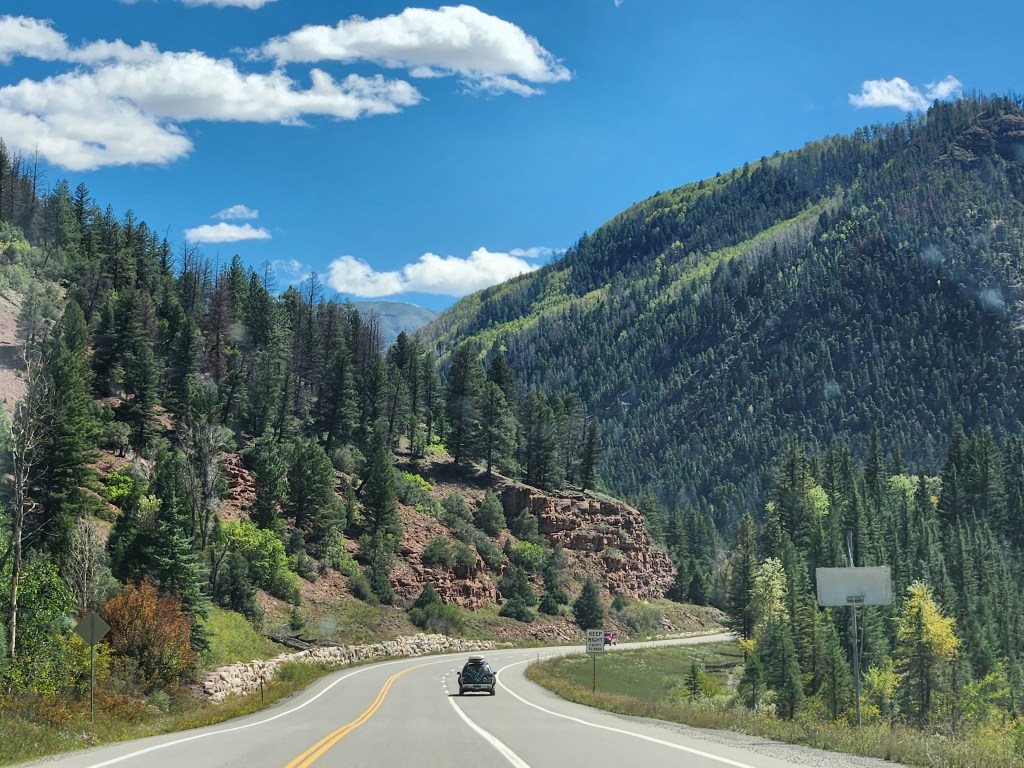
The next morning, the drive from Norwood to Montrose was beautiful. I got some gorgeous pictures coming through the valley.
Saturday was the first annual Montrose Book Fair. My Aunt Mary Anna came early and bought signed copies of both Anywhere But Here and The Space Between Songs. She already had the ebooks, but she wanted copies I could autograph. That meant a lot to me.
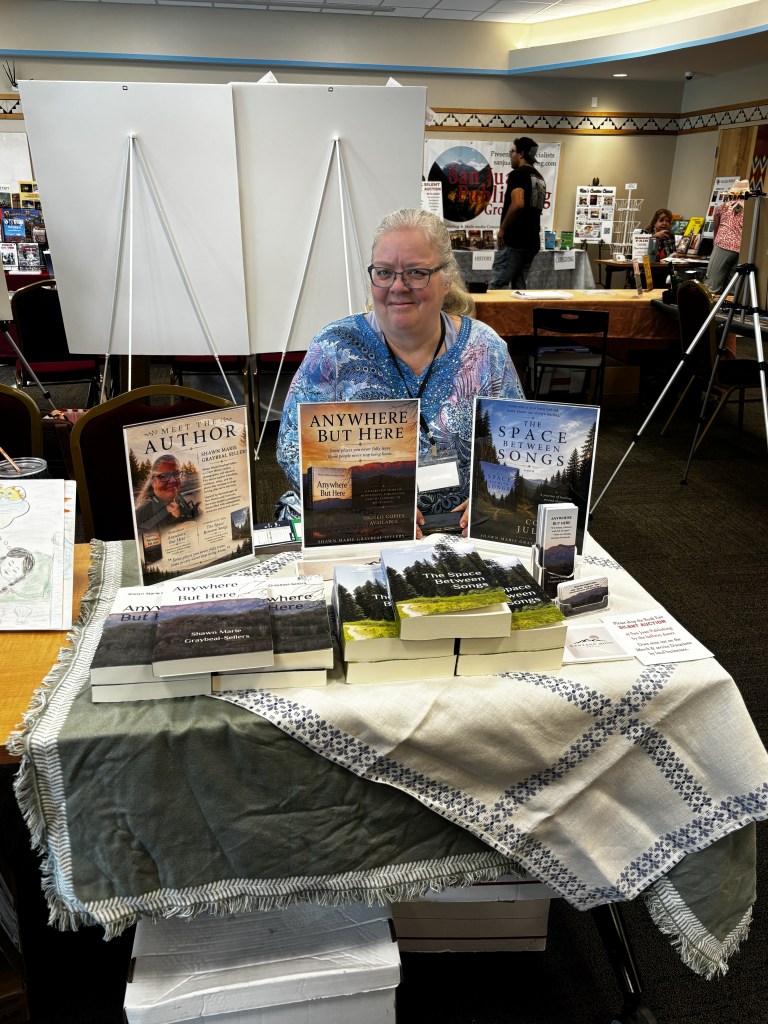
The fair was fun. There was great food and plenty of interesting people to talk with. Near the end of the day, my cousin Jerri and her daughter Jamie arrived after driving through a serious downpour from Grand Junction. Jamie bought The Space Between Songs; she already has Anywhere But Here. Jerri had forgotten to bring her copies for me to sign, but I’ll see her in November.
I sold thirteen books over the weekend, mostly to family. It meant a lot to have them show up, visit, and take my stories home with them.
After the fair, we headed toward Nucla. I wanted to stop for more pictures in the valley, but we were in a hurry. Samantha and Corey had given us a boat, and we needed to get to Nucla in time to meet with a notary for the paperwork. Even without stopping, there was plenty to see. We spotted a big herd of elk just outside Norwood and several deer along the drive.
Then we went to Uncle Frank and Fran’s house—the house that belonged to my grandma. Uncle Frank, my dad, and Aunt Mary Anna were all born there. I hadn’t been to Nucla in more than sixteen years, and it had been closer to twenty-five since I’d been inside that house. Spending time with family there was one of the best parts of the weekend.
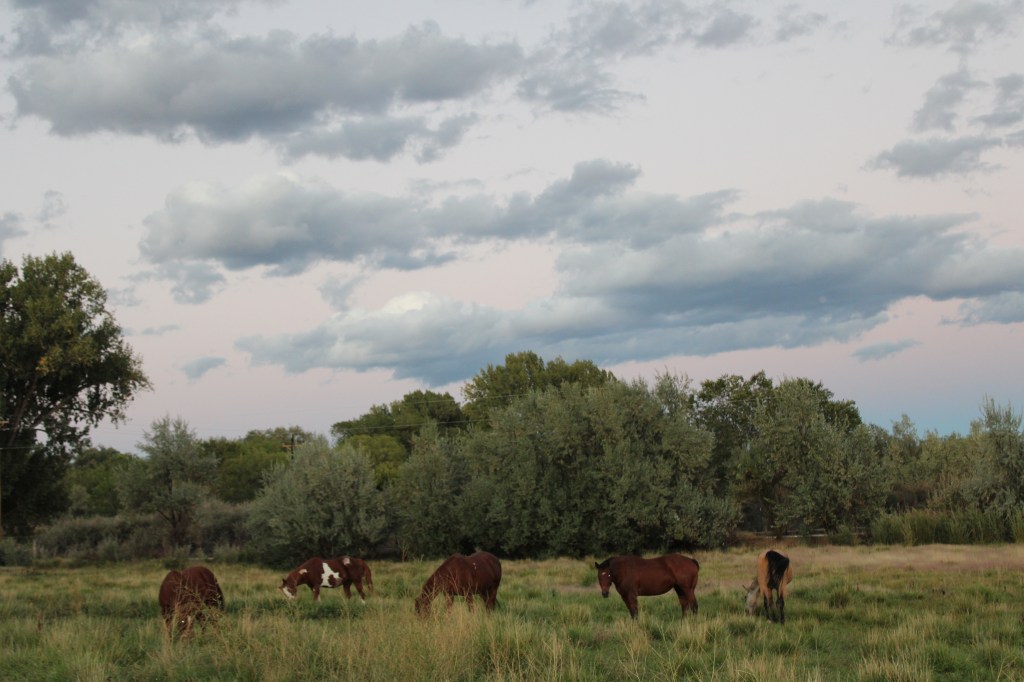
Uncle Frank also has horses in his pastures that belong to a neighbor. I love horses, so of course I took a bunch of pictures—especially of the buckskin and the pinto.
I’d come with another photograph in mind, too. I thought the old barn might make the perfect cover image for Midway Saints. I took pictures in the Saturday evening light and went out again early Sunday morning. I did come home with the photograph I want to use for the cover, but it wasn’t the image I had pictured before we arrived.
On the way home, we drove over Lizard Head Pass, a route I’d never taken before. The aspens were just starting to turn, and the whole drive was beautiful. It gave me one more chance to enjoy the Colorado scenery before heading home.
I went for a book fair, hoping I might also find a photograph for my next book. I came home with both of those experiences, a camera full of pictures, a boat, and the pleasure of spending time with family in a place I hadn’t visited in far too long.
-
Oatmeal Bread
Soft, hearty oatmeal bread that’s wonderful with soup, jelly, or just a little butter.
Ingredients
- 1 cup old-fashioned rolled oats
- 2 cups boiling water
- 3 tablespoons butter
- ⅔ cup brown sugar
- 2 tablespoons molasses
- 1 tablespoon sugar
- ½ cup potato flakes
- 2 packages active dry yeast
- 1½ teaspoons salt
- ½ cup warm water
- 5 cups flour
Directions
- In a large bowl, combine the oats, boiling water, butter, brown sugar, and molasses. Try not to eat it—this makes an awesome bowl of oatmeal!
- In a separate bowl, combine the sugar, potato flakes, salt, yeast, and warm water. Let sit for about 5 minutes.
- Once the oatmeal mixture is warm to the touch, stir in the yeast mixture. Add the flour and mix until a dough forms.
- Mix with a dough hook for 6 minutes, or knead by hand until the dough no longer sticks to your fingers.
- Cover and let rise for 1 hour.
- Shape into loaves and let rise for another hour.
- Bake at 350°F for about 30 minutes, until golden brown.
Enjoy with soup, jelly, or all by itself!
-
Pan Chili
This quick three-ingredient chili is perfect for a busy evening. It comes together in one pan and is especially good topped with melted cheese and served with warm, buttered tortillas.
Ingredients
- 1 pound ground beef or other ground meat
- 1 can Rotel diced tomatoes and green chiles, undrained
- 1 can chili beans, undrained
- Grated cheese, for topping
- Warm buttered tortillas, for serving
Preparation
- Brown the ground meat in a large skillet over medium heat. Drain any excess grease.
- Add the Rotel tomatoes and chili beans.
- Stir everything together and cook until thoroughly heated.
- Sprinkle grated cheese over the top and allow it to melt.
- Serve hot with warm, buttered tortillas.
-
Cajun Shrimp Sausage and Bean Stew
This quick, hearty stew brings a little of my Louisiana roots to the table. Len doesn’t eat seafood, so I have also made it without the shrimp. The smoked sausage, beans, peppers, and seasoned tomato broth still make a delicious meal.
Ingredients
- 2 teaspoons olive oil
- 1 cup chopped bell peppers in assorted colors
- 1 cup diced onion
- 2 cups thinly sliced smoked sausage
- 1 teaspoon minced garlic
- 2 teaspoons Cajun seasoning, such as Tony Chachere’s
- 3/4 cup chicken broth
- 1 can Rotel diced tomatoes and green chiles, undrained
- 1 pound medium shrimp, peeled and deveined
- 1 can kidney beans, rinsed and drained
- Chopped parsley, for serving
Preparation
- Heat the olive oil in a large saucepan over medium-high heat.
- Add the bell peppers, onion, smoked sausage, garlic, and Cajun seasoning. Sauté for about 3 minutes, stirring occasionally, until the peppers begin to soften.
- Add the chicken broth and tomatoes. Bring the mixture to a boil.
- Stir in the shrimp and kidney beans. Cover, reduce the heat, and simmer for about 6 minutes, or until the shrimp are opaque and completely cooked.
- Sprinkle with chopped parsley and serve.
Variation
For a seafood-free version, omit the shrimp. The smoked sausage and kidney beans make the stew filling enough without it.
-
Tony’s Peanut Butter Butterfinger Cheesecake
My son Tony loves cheesecake, and he loves peanut butter. For his 21st birthday, I decided to combine the two and created this rich peanut butter cheesecake with a salty pretzel crust, Butterfinger pieces, and white chocolate chips.
Tony turns 30 this week, which makes this the perfect recipe to bring over from my old CoffeeQuilter blog. Nine years later, it is still very much his cheesecake.
Prep time: 25 minutes
Bake time: 65–70 minutes
Cooling time: At least 1 hour
Servings: 16–20Ingredients
Pretzel Crust
- 1½ cups crushed pretzels
- ⅓ cup butter, melted
Peanut Butter Filling
- Five 8-ounce packages cream cheese, softened
- 1½ cups sugar
- 1 cup peanut butter
- 2 teaspoons vanilla extract
- 3 large eggs
- 1 cup Butterfinger pieces
Topping
- ½ cup crushed pretzels
- ½ cup Butterfinger baking bits or finely chopped Butterfinger pieces
- ½ cup white chocolate chips
Directions
- Preheat the oven to 350°F. Grease a 9-by-13-inch baking pan.
- Combine 1½ cups crushed pretzels with the melted butter. Press the mixture evenly into the bottom of the prepared pan.
- Bake the crust for 5 minutes. Remove it from the oven and allow it to cool.
- In a large mixing bowl, beat the softened cream cheese and sugar until smooth.
- Add the peanut butter and vanilla, mixing until thoroughly combined.
- Add the eggs and beat on low speed just until combined. Avoid overmixing.
- Gently stir in 1 cup of Butterfinger pieces.
- Pour the filling over the cooled pretzel crust and spread it evenly.
- Bake for 50–55 minutes, or until the cheesecake is almost set. Remove it from the oven and let it rest for 15 minutes.
- Combine the crushed pretzels, Butterfinger pieces, and white chocolate chips for the topping. Sprinkle the mixture evenly over the cheesecake.
- Return the cheesecake to the oven and bake for an additional 10 minutes.
- Cool for at least 1 hour before serving. Refrigerate any leftovers—if Tony leaves you any!
Shawn’s Notes
Make sure the cream cheese is fully softened before mixing so the filling stays smooth. Once the eggs are added, mix only until everything is combined.
The pretzels provide a salty contrast to the sweet peanut butter filling, Butterfinger candy, and white chocolate. Cut the cheesecake into small pieces—it is wonderfully rich.
-
Mama Calderon’s Pinto Beans with Chicken and Red Chile
In the Calderon family, food is one of the ways people are welcomed, comforted, and reminded that they belong. This hearty pot of pinto beans, chicken, and New Mexico red chile is exactly the kind of meal Mama Calderon would serve to anyone who found their way to her table.
Prep time: 15 minutes, plus 1 hour to quick-soak the beans
Cook time: Approximately 2 hours
Servings: 6–8Ingredients
- 2 cups dried pinto beans, sorted and rinsed
- ½ cup bacon grease
- 1 pound boneless, skinless chicken breast, cut into bite-sized pieces
- Water
- 2–4 tablespoons New Mexico red chile powder, depending on your preferred heat and flavor
- 1–2 teaspoons garlic powder, or garlic to taste
- Chicken bouillon, to taste
- Salt, to taste
- Black pepper, to taste
Optional for serving
- Shredded cheese
- Warm flour tortillas
Quick-Soak the Beans
- Place the sorted and rinsed beans in a large pot.
- Cover them with water by approximately two inches.
- Bring the water to a rolling boil and boil for 2 minutes.
- Remove the pot from the heat, cover it, and let the beans soak for 1 hour.
- Drain and rinse the beans before cooking.
Directions
- Return the soaked and rinsed beans to the pot. Add the bacon grease and enough fresh water to cover the beans by approximately two inches.
- Bring the beans to a boil, then reduce the heat and simmer gently until they begin to soften, approximately 60–90 minutes. Check them periodically and add more water if needed.
- Add the chicken, red chile powder, garlic, chicken bouillon, salt, and pepper.
- Continue simmering until the beans are completely tender, the broth has thickened, and the chicken is cooked through, approximately 25–35 minutes. Add water as needed to reach your preferred consistency.
- Taste and adjust the chile, garlic, bouillon, salt, and pepper before serving.
- Ladle into bowls and top with shredded cheese, if desired. Serve with warm flour tortillas.
Shawn’s Notes
The bacon grease gives the beans their rich, savory base. Because both it and the chicken bouillon add salt, wait until the pot has simmered before adding much additional salt.
This is a flexible recipe. Start with less red chile and bouillon, then add more as the beans cook. The chile will deepen in flavor, and the broth will become richer as it thickens. Like most pots of beans, it may taste even better the next day.
Categories: Main Dishes, Soups & Stews, New Mexican Food, From the Books
Tags: pinto beans, chicken, red chile, bacon grease, comfort food, Mama Calderon, Anywhere But Here -
El Nogal: The Trail I Was Meant to Hike
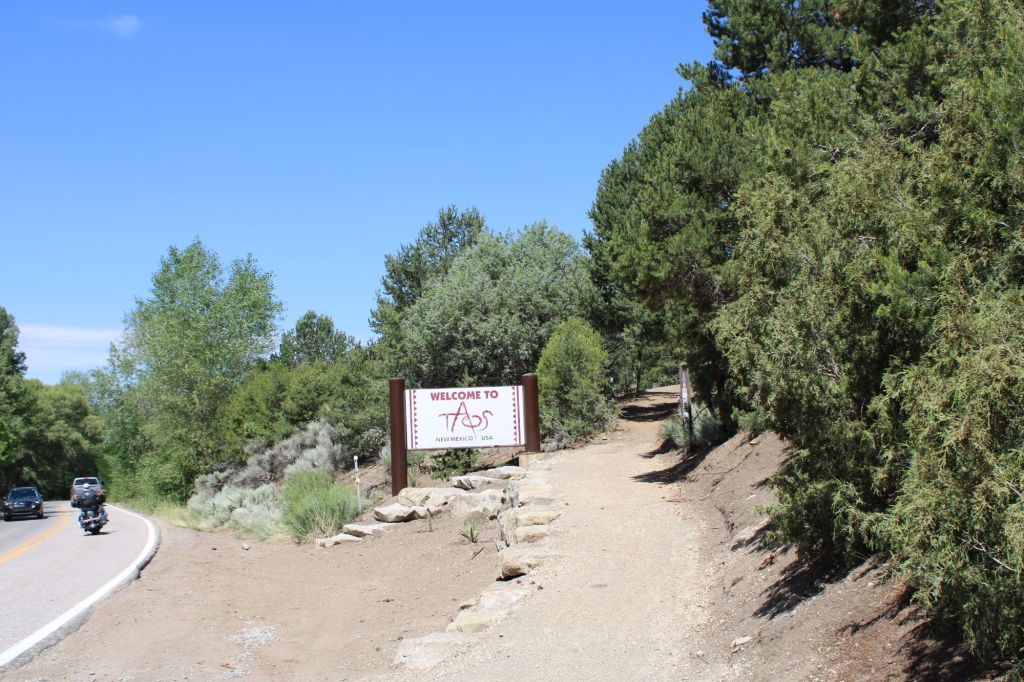
This summer, Len and I spent two days in Taos celebrating our anniversary.
We had three things on the agenda: enjoy one of our favorite places in New Mexico, spend an evening listening to Lucero, and get in a hike before heading home.
That hike was going to be El Nogal.
Well…probably.
The El Nogal trailhead is also where you park if you want to attempt the Divisidero Trail. Divisidero had been on my mind for a while. After losing weight and becoming more active, I wondered if I was finally ready.
I wasn’t sure.
There was only one way to find out.
I crossed the highway and started up the Divisidero Trail.
It didn’t take long to get my answer.
The combination of the altitude and the steep climb was simply more than I was ready for. I wasn’t in trouble, and I wasn’t discouraged. I had learned what I came to learn.
Not yet.
So I turned around, crossed the highway, and headed down the El Nogal Trail.
As it turned out, that was exactly where I needed to be.
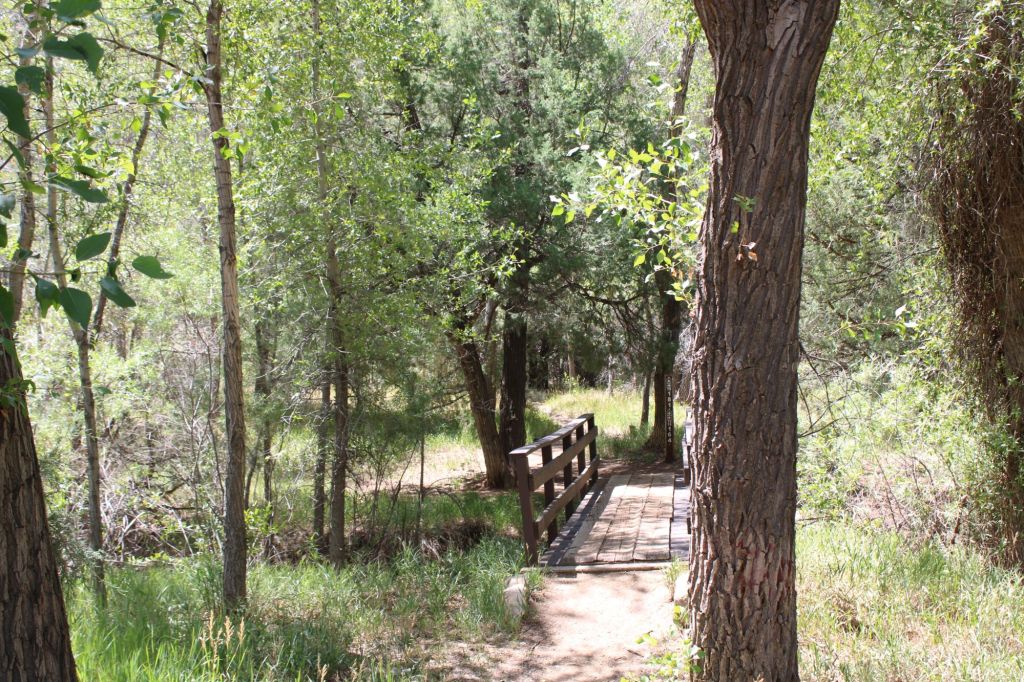
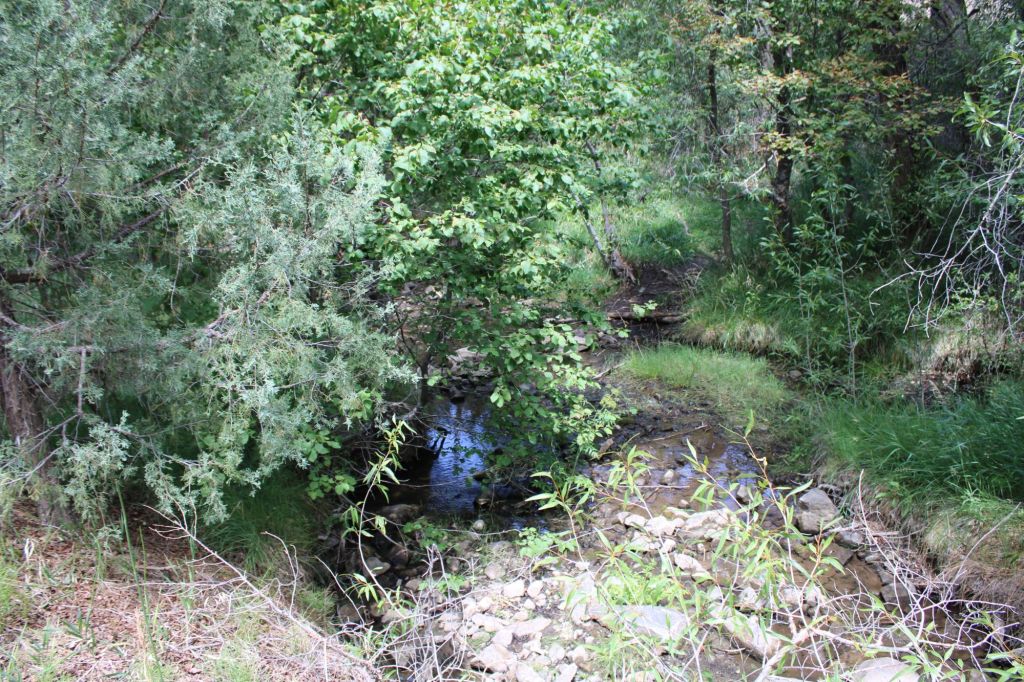
El Nogal isn’t one of New Mexico’s famous hikes. It doesn’t end at a dramatic overlook or the state’s highest peak. Instead, it follows a small creek through the forest, climbing gradually enough that you can spend your time looking around instead of watching every step.
The sound of the water stayed with us for much of the hike. Wildflowers lined parts of the trail, and the shade of the trees made it a welcome escape from the July sun. It wasn’t a hike that demanded anything from me. It simply invited me to enjoy being there.
Some of my favorite photographs from the summer came from that morning.
Looking back, I’m glad I tried Divisidero.
If I hadn’t, I would probably still be wondering whether I was ready. Instead, I have an answer—and I know what I need to work toward.
More importantly, I didn’t let “not yet” become “not today.”
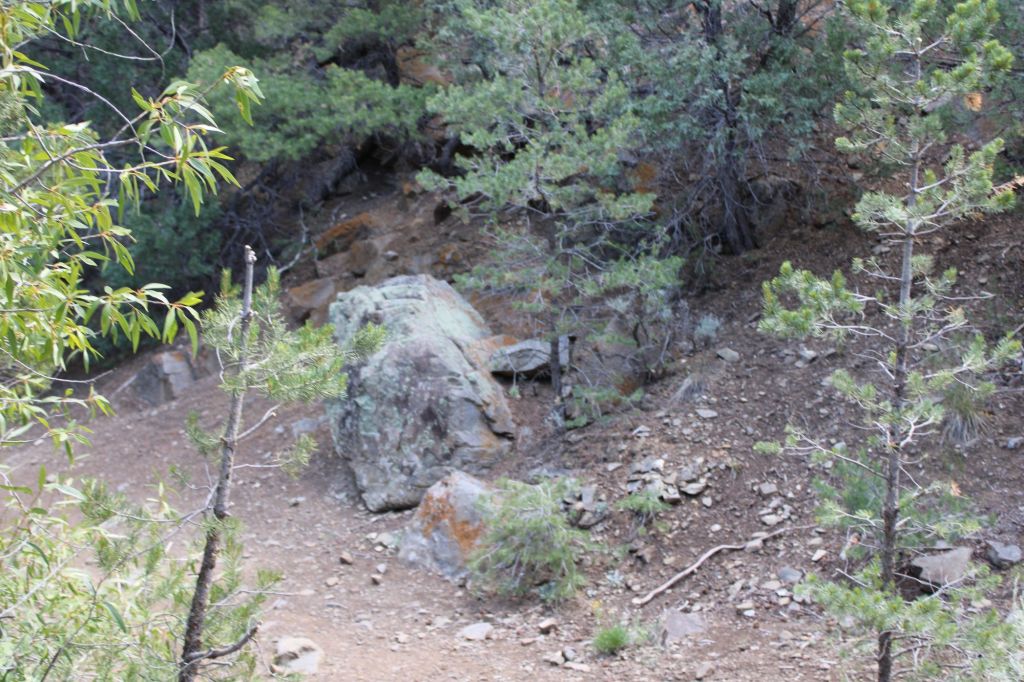
I still spent the morning on a beautiful trail with Len. We still enjoyed the mountains. We still came home with memories and photographs that remind me why I love New Mexico.
Divisidero is still there.
So are Williams Lake, Wheeler Peak, and countless other trails I hope to explore over the coming years.
One of the things I’ve learned about hiking is that the mountains aren’t going anywhere. They’ll be there when I’m ready.
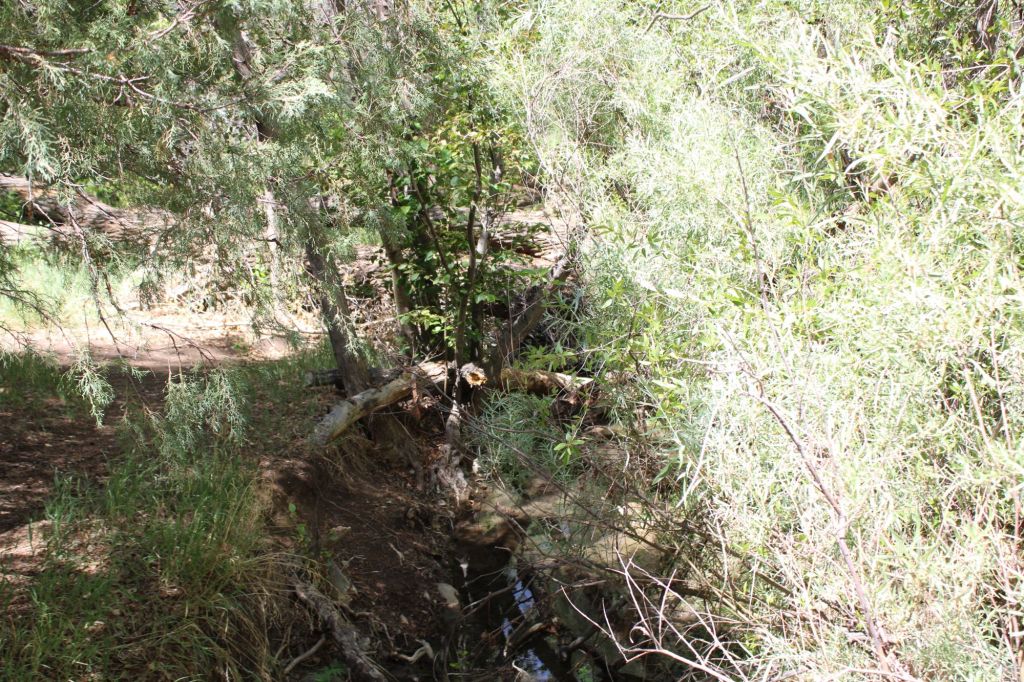
Until then, I’ll keep taking the next trail, enjoying the journey, and appreciating places like El Nogal.
Sometimes the hike you planned isn’t the one you remember most.
Sometimes it’s the one that was waiting just across the parking lot.
-
The Ones Who Leave Paw Prints Behind
Today marks another anniversary.
Four years ago today, while I was fighting through one of the hardest periods of my life physically, I lost my Micky.
Earlier that same year, I had said goodbye to Rusty, my little dachshund who had been with me for nearly fourteen years. This week also reminds me of Luna, the black cat I lost several years ago.
It seems strange sometimes how we measure our lives. We remember graduations, anniversaries, birthdays, and milestones. But pet owners often remember the years by who was waiting at the door when we came home.
Every one of them has their own story.
Rusty and his sister Penny came into my life in 2008 when they were about four months old. We quickly nicknamed them the Houdini Weenies because they could escape from just about anywhere. In fact, the very night I moved into my house, they slipped out and ended up in doggie jail.
When I went to bail them out, the employee looked at me with a perfectly straight face and informed me that my two dachshunds had somehow managed to kill a pigeon inside their kennel.
Apparently, they hadn’t just been arrested—they had committed murder in doggie jail.
I always joked that they were hardened criminals.
Before that, they’d already developed another unusual hobby: hunting skunks around the old house. More than once I wondered how two little dachshunds thought they were eighty-pound hunting dogs.
In 2018, Rusty and Penny escaped again. Rusty eventually wandered back home.
Penny never did.
Even now, I still wonder what happened to her.
Luna entered my life because she chose us.
She followed my son Tony home one day. Since he couldn’t keep her at his dad’s house, she came to live with me in 2013.
She was one of the friendliest cats I’ve ever owned. She loved people, especially me.
She also had one very peculiar habit.
She liked to sleep…
…on my face.
It wasn’t always the most comfortable arrangement, but it was impossible to stay annoyed with her for long. She simply wanted to be as close as she could.
Then there was Micky.
My sweet Mick.
I adopted him from a rescue in 2015. He was painfully thin, weighing only about forty pounds. Over the next few years, he filled out into the magnificent German Shepherd he was always meant to be. At his healthiest, he probably weighed somewhere around 120 pounds.
He never seemed to realize just how big he was.
One of my favorite memories happened not long after I adopted him. He was crate-trained, so every night he slept in his crate.
One night, something outside caught his attention.
The next thing I knew, he’d somehow broken out of the crate and was standing in the doorway to my bedroom, staring out into the house and growling.
There was nothing there.
Or at least nothing I could see.
But in that moment, he wasn’t scared.
He was protecting me.
I never put him in the crate at night again.
Instead, he claimed his favorite spots—the footstool during the day and, whenever he thought he could get away with it, my bed at night. He’d try to sneak up beside me as quietly as a 120-pound German Shepherd possibly could, convinced I wouldn’t notice.
His hips eventually betrayed him.
He was only nine years old when I had to let him go.
I still miss him.
Today, life is a little quieter.
Tyler came into our family when Len and I moved in together in 2018. He’s probably the most talkative cat I’ve ever known. Every evening while I’m writing, he settles onto the couch nearby, occasionally offering commentary that I’m certain he thinks is important.
After Luna died, we adopted Peanut so Tyler wouldn’t be lonely.
Somehow, the little kitten grew into an enormous cat who firmly believes that the bed belongs to him and that Len and I are simply fortunate enough to share it. He’s a bed hog, but he’s also one of the sweetest cats I’ve ever known.
They’re wonderful, and I can’t imagine the house without them.
But every now and then someone asks if I’ll ever have another dog.
The honest answer is…
I don’t know.
Rusty and Micky were the last two dogs I’ve had, and they were such good boys.
Maybe someday my heart will be ready again.
Maybe it won’t.
For now, I’m simply grateful for the years I had with them.
One of the hardest parts of loving animals is knowing that, eventually, we’ll have to say goodbye.
The trade doesn’t seem fair.
We get a decade or maybe two if we’re lucky.
They give us everything they have.
They celebrate us when we come home, sit beside us when life falls apart, and somehow know exactly when we need them most. They ask for so little in return.
The heartbreak is real.
So is the joy.
If I had it to do over again, I’d choose every one of them.
Even knowing how their stories end.
Because they became part of mine.
And while Tyler and Peanut keep this house full of life today, there will always be a special place in my heart for Rusty and Micky.
Those sweet boys were the best.
Who has been the pet you’ll never forget? I’d love to hear their story in the comments.
-
The Journey of The Space Between Songs: A 21-Year Saga
There are moments in writing that every author imagines. Typing “The End.” Holding the first proof copy. Seeing your book listed online for the first time.
This week I reached another one of those milestones.
After months of editing, revising, proofreading, formatting, and uploading files, The Space Between Songs is officially scheduled for release. The Kindle edition is available for preorder, the paperback is ready for release, and the hardcover is making its way through its final review.
Seeing all three editions lined up on my publishing dashboard was exciting, but in many ways this story didn’t begin this year.
It didn’t even begin with Anywhere But Here.
It began more than twenty years ago.
In 2005, as my first marriage was falling apart, I found myself turning to writing in a way I never had before. Over a three-day weekend, I sat down and wrote the first eight chapters of a novel called Shadows. The story poured out of me. I wasn’t thinking about publishing or selling books. I was simply telling a story that had taken hold of my imagination.
Over the next several years, I continued writing until the novel was complete.
Then it sat on a shelf.
Life happened. I continued teaching. I raised my family. I kept writing other things, but Shadows waited patiently.
Finally, in 2017, I decided it was time to share it.
Looking back, I smile a little at that first publication. The novel was only about 45,000 words. I knew almost nothing about book formatting or publishing. I didn’t understand trim sizes, typography, margins, ISBNs, or distribution. I simply wanted to hold my book in my hands and make it available to anyone who wanted to read it.
And people did.
The readers who found Shadows genuinely connected with Jessi’s story. Their encouragement meant the world to me. Whenever I mentioned the possibility of expanding the novel someday, there was understandable hesitation. People liked the story they had read, and I wasn’t sure I wanted to change something that already meant something to readers.
Then I wrote Anywhere But Here.
Writing Michelle’s story changed me as an author. By the time I finished that novel, I had grown tremendously—not just technically, but in my understanding of character and storytelling.
When I picked up Shadows again, I saw something I hadn’t fully realized years earlier.
Jessi deserved more.
She deserved to be every bit as strong, resilient, and complex as Michelle had become. She deserved a richer backstory, deeper relationships, greater challenges, and the opportunity to truly earn the hope she finds at the end of her journey.
So instead of simply revising Shadows, I began writing the story that surrounded it.
I wrote the beginning that explained how Jessi arrived at her darkest moments. I wrote the ending that explored healing, forgiveness, friendship, and finding home again. Along the way, existing scenes expanded, relationships deepened, new characters emerged, and familiar ones became far more fully realized.
What had once been a 45,000-word novel slowly transformed into a 164,000-word novel.
The original Shadows still exists.
Today, it lives as Part Three of The Space Between Songs.
In many ways, it became the heart of a much larger story.
The last few months have been an entirely different kind of journey.
Readers often imagine that once the writing is finished, the hard part is over. In reality, that’s when a different kind of work begins.
I’ve adjusted margins and spacing. I’ve rebuilt chapter headings, corrected blank pages, reformatted the manuscript more times than I can count, uploaded revised files, redesigned covers, learned the differences between Amazon KDP and IngramSpark, and spent countless hours making sure the finished book looked as professional as the story deserved.
One of the most valuable parts of that process came when I received the printed proof copy.
For the first time, I wasn’t reading as the author trying to improve every sentence.
I was reading as a reader.
I found eleven small corrections. A few formatting issues. A handful of sentences that needed polishing.
What surprised me most was what I didn’t find.
I didn’t find scenes I wanted to rewrite.
I didn’t find conversations that needed major changes.
For the first time, I simply enjoyed reading the story.
That realization was incredibly freeing.
Writers are notorious for believing every manuscript can always be improved. There is always another sentence to tweak or another paragraph to rewrite. Eventually, though, every writer has to decide when a book is finished.
For me, this was that moment.
The beta readers loved the story. My Authorcraft manuscript review validated what I had hoped—that the foundation was solid. Reading the proof confirmed it.
The story was ready.
Another milestone during this project was something I’ve dreamed about for a long time: publishing under my own imprint, Manzano Moon Press.
Seeing that logo on the cover means more to me than most people probably realize. It represents years of dreaming about becoming not just a writer, but an independent publisher who takes ownership of every part of the creative process.
Writing the novel was only one part of this journey.
Building the book was another.
As challenging as independent publishing can be, I wouldn’t trade the experience. Every lesson I’ve learned—from formatting and cover design to ISBNs and distribution—will make the next book even better.
And thankfully, there will be a next book.
Bear and Becky’s story is already waiting.
For now, though, I’m simply taking a moment to appreciate this one.
A story that began during one of the hardest seasons of my life in 2005 has finally become the book I always believed it could be.
On July 18, 2026, The Space Between Songs will finally be released into the world.
I can’t wait to share Jessi and Ryan’s story with all of you.
Thank you to everyone who has encouraged me, read early versions, offered feedback, attended book signings, or simply followed along with this journey. Your support has meant more than I can ever adequately express.
Sometimes stories take the long road.
This one certainly did.
And I think it’s stronger because of it.
-
How a Song Inspired My Name and Love for Storytelling
The Song That Named Me
I’ve always known I was named after a song. At least, that’s what my mom always told me.
She grew up in Louisiana, but after she married my dad, they moved to Alaska for his military service. She was young, pregnant with me, and desperately homesick. With my dad at work all day, she spent her hours alone in a small apartment, waiting for my arrival.
So she listened to the rad
io.
Country music became her constant companion, filling that little apartment while she dreamed of home. One day, a song came across the airwaves. She never caught the artist’s name, and she never saw the title in print. Back then, if you missed the DJ’s back announce, the song simply drifted away into memory.
But she heard a name.
Or at least, she thought she did.
She was certain the singer was crooning “Shawn Marie.” She loved the way it sounded—the rhythm, the sweetness. More than anything, it reminded her of home.
So when I was born, that’s the name she gave me.
For more than sixty years, she carried that song in her memory.
As I got older, she told me the story of how I got my name. We both knew there was a song out there somewhere, but neither of us knew the artist or the title. She always thought it might have been Cajun country because it reminded her so much of Louisiana. Every few years, one of us would search for it, hoping we’d finally solve the mystery.
We never did.
Then, just this week, I stumbled across a recording of Wynn Stewart singing “Sha-Marie.” The moment I heard it, something clicked. I posted it on Facebook with one simple question:
“Mom…is this the song?”
Her answer came almost immediately.
“YES!!!!!!!! ❤️ That’s the one. I never saw the name in writing anywhere, so I thought he was saying Shawn Marie. And it sounded sooooo beautiful. That is the song.”
Listen to Wynn Stewart’s “Sha-Marie”:
https://youtu.be/p8-QxnqT6W0?si=2tek6Eqp51zLqiYn
1965 Capitol Recording.
Reading her response made me smile.
After more than six decades, we had finally found the song we’d both been looking for.
But as I listened, I realized something else.
I’ve always been drawn to country music that feels lived in. The polished Nashville sound has never resonated with me the way the storytellers have. My playlists are filled with Merle Haggard, Dwight Yoakam, Buck Owens, Cody Jinks, Reckless Kelly, the Turnpike Troubadours, and so many others whose songs tell honest stories about ordinary people.
Finding out that Wynn Stewart recorded the song that inspired my name felt like an unexpected homecoming.
Stewart is often credited as one of the pioneers of the Bakersfield Sound, the raw, guitar-driven style that helped shape Buck Owens, Merle Haggard, and generations of artists who followed. Without ever realizing it, I’d spent years gravitating toward the musical legacy that began with the man whose song gave me my name.
Maybe that’s why his voice felt so familiar.
Maybe my love of storytelling through music didn’t begin with my first novel.
Maybe it began before I was even born, in a tiny apartment in Alaska, where a homesick young woman from Louisiana spent her days listening to country radio while she waited for me.
Looking back now, I can see those threads woven throughout my life.
Music has always been more than something I listen to. It has become part of the way I tell stories. Every one of my novels has a playlist. Sometimes a song unlocks a character. Sometimes it inspires an entire chapter. My newest novel, The Space Between Songs, was born from that relationship between music and storytelling.
For years, I never questioned where that connection came from.
Now I think I know.
Long before I ever put a story on the page…
My own story began with a song.
-
Rediscovering Carlito Springs: A Journey of Healing and Nature

Some trails are beautiful because of the scenery.
Others are beautiful because every step feels like you’re walking through a story.
This morning I returned to Carlito Springs Open Space for the first time in nearly ten years.
For a while, it wasn’t even possible. The trail closed for renovations, and by the time it reopened, life had taken me in a very different direction. Between serious health problems and the long road back, hiking became something I remembered instead of something I did.
Today changed that.
Carlito Springs isn’t just another trail for me. It represents the moment I finally realized that I’m back.
Not where I was ten years ago.
Maybe somewhere even better.
The trail winds through cool cottonwoods, junipers, and ponderosa pines, crossing little bridges before climbing steadily into the hills above Tijeras Canyon. It isn’t the longest hike in New Mexico, but it demands enough of you that, for me, it became the most strenuous hike I’ve completed since my health began to decline.
Every uphill section reminded me how far I’ve come.
Every switchback felt like another step away from hospitals and doctors’ offices and toward the mountains I’ve missed so much.
Along the way I spotted one of the most striking black squirrels I’ve ever seen, its bright white tail flashing as it darted across the trail.

Then, almost at the very end of the hike—just as I was beginning the downhill—I found the day’s biggest surprise.
A prairie rattlesnake lay stretched across the hillside just above the trail.
It wasn’t rattling or threatening. It simply watched me for a moment before slowly continuing on its way.

Encounters like that are part of hiking in New Mexico. They remind us that we’re visitors in places that still belong to wildlife. I was happy to admire it from a respectful distance before continuing down the trail.

When I got home, I started reading about the history of Carlito Springs, and it made me appreciate the hike even more.
Long before it became Bernalillo County Open Space, this place began as Camp Whitcomb in the early 1880s. Horace Greenwood Whitcomb settled here while prospecting for gold, built irrigation canals, planted orchards and vineyards, and eventually transformed his homestead into a popular mountain retreat.
Over the decades it became Whitcomb Springs and later Carlito Springs, named by newspaper publisher Carl Magee after his son Carlito, who died tragically in a plane crash. The property evolved into a mountain resort complete with trout ponds, terraced gardens, orchards, cabins, and a tea room where visitors escaped Albuquerque’s summer heat. It even served as a tuberculosis retreat, taking advantage of New Mexico’s fresh mountain air during the early twentieth century.

One detail completely captured my imagination.
The owners planted more than 250,000 tulip bulbs along the mountain paths. Imagine walking these same trails in spring a century ago, surrounded by rivers of colorful blooms.
Today, nature has reclaimed much of the resort.
The stone retaining walls remain.
The old cabins still stand.
The springs still flow.

The trails continue to wind beneath towering trees.
You can almost feel the echoes of everyone who came before.
As a history teacher, I love discovering places like this.
As a writer, I can’t help imagining the lives that unfolded here.
But today, Carlito Springs gave me something even more personal.
It reminded me that healing doesn’t happen all at once. It comes one workout, one mile, one hill, one trail at a time.
Ten years ago, I hiked Carlito Springs without giving it much thought.
Today, I finished the hike with a grateful heart.
Sometimes the greatest journey isn’t to a new place.

Sometimes it’s finding your way back to one you thought you might never reach again.
-
Where the Sky Builds Mountains
The Sandias and the sky were doing cool stuff!
There are places in New Mexico where the landscape seems to exist in layers.
The first thing you notice is the valley itself—green fields stretching across the foreground, cottonwoods standing guard along irrigation ditches, and the dusty earth that reminds you this is still high desert country. Then your eyes rise to the Sandia Mountains, their familiar blue-gray slopes anchoring the horizon. And above them all, towering over everything, are the clouds.
Summer clouds in New Mexico are never content to simply drift by.
They rise.
They stack upon themselves in great white columns, growing higher and higher until they seem almost impossible. Some days they look like castles. Other days they resemble distant mountain ranges of their own. They gather quietly, announcing that monsoon season is beginning and that somewhere, perhaps just beyond the next ridge, rain is already falling.
Standing there, I found myself looking upward more than outward.
The mountains are ancient and unchanging. The fields below are the result of generations of work. But the clouds are always becoming something new. They are reminders that even familiar places can surprise us, that beauty often arrives unexpectedly, and that sometimes the most remarkable part of a landscape isn’t the ground beneath our feet, but the sky above our heads.
Living in New Mexico has taught me to pay attention to moments like these.
Not because they are rare.
Because they happen every day, and it’s far too easy to stop seeing them.
On this afternoon, with the Sandias resting beneath an ocean of white clouds and the valley lying quiet below, I was reminded once again why I love this place.
The light here is different.
And sometimes, so is the sky.
Photographed in the Rio Grande Valley beneath the Sandia Mountains, where summer monsoon clouds begin their slow climb into the New Mexico sky.

-
What I Tell Them Before They Go
-
The Journey to My Book Signing: 47 Copies, One Dream
Gathering the Books
One of the things I have discovered about publishing is that sometimes the stories surrounding the book become stories of their own.
With my signing at Page 1 Books coming up on June 28, I realized I needed inventory. I ordered twenty copies of Anywhere But Here from IngramSpark and settled in to wait.
Then I started worrying.
What if they didn’t arrive in time?
Writers are good at imagining possibilities. Sometimes that is a blessing and sometimes it means creating problems that don’t actually exist. So, just to be safe, I ordered another twenty-five copies from Amazon. My reasoning was simple enough. Surely one order or the other would get here before the signing.

Tuesday afternoon, the IngramSpark order arrived.
One box.
Twenty books.
Everything neat and simple.
Problem solved.
Or so I thought.
Thursday morning, a package arrived containing one book.
Just one.
I laughed and figured the rest would show up later.
A little while after that, another box appeared containing fourteen books. It was a perfectly good-sized box, large enough that it easily could have held all twenty-five copies, but apparently somebody somewhere had other plans.
By six o’clock that evening, ten more packages had arrived.

Not one box.
Ten packages.
Each containing a single book.
By then I was beginning to wonder what my UPS driver thought I had gotten myself into.
And just to add a little mystery to the whole adventure, one rogue book showed up that wasn’t mine at all.
By the end of the day, I had books everywhere.

Twenty copies from IngramSpark.
Twenty-five from Amazon.
And the three copies I already had.
Forty-seven books.
Forty-seven copies of a story that, not all that long ago, existed only in my imagination.
Standing there looking at them all, I found myself smiling.
Not because of the boxes.
Not because of the ridiculous shipping adventure.
But because of what they represented.
Page 1 Books has been part of my life for decades. Since moving to Albuquerque at nineteen, I have spent countless hours wandering those shelves. Like so many readers, I have gone there searching for stories, for inspiration, and sometimes simply for a quiet place to breathe.
I never imagined that one day I would be sitting there as the author.
Yet in just a couple of weeks, that’s exactly what will happen.
Forty-seven books.
Years of writing.
Countless revisions.
A lot of coffee.
A lot of self-doubt.
A lot of hope.
And somehow, a table at Page 1 Books.
Even now, that still feels a little unbelievable.
And honestly, I hope it never stops feeling that way.
— Shawn Marie Graybeal Sellers
Some places you never fully leave. Some people never stop being home.

-
Why Dreams Never Expire: Embracing Life’s Journey
And I’m Not Done Yet
I don’t know exactly what comes next.
I don’t know how many years I have.
I don’t know which dreams will work out and which won’t.
But I know this.
Life knocked me around a little.
Dreams had to wait.
Things didn’t always go according to plan.
But I’m still here.
And I’m not done yet.
For a long time, I thought dreams had expiration dates.

Not because anyone told me they did. Life simply got busy. There were children to raise, bills to pay, papers to grade, responsibilities to carry, and difficult seasons to survive. Like so many women, I became very good at taking care of everyone else.
And somewhere along the way, some dreams quietly moved to the back shelf.
Not abandoned.
Just waiting.
If someone had told me twenty years ago what this season of my life would look like, I wouldn’t have believed them.
I wouldn’t have believed that I would become a published novelist. I wouldn’t have imagined that readers would connect with my stories, or that I would spend weekends taking photographs of New Mexico, creating videos, planning book signings, and thinking about future projects.
I certainly wouldn’t have imagined applying to speak at a leadership conference.
Life has never gone exactly according to plan. There have been disappointments, losses, health scares, and years that felt more like survival than progress. There were dreams that had to wait while more urgent things demanded attention.
But waiting is not the same as giving up.
Dreams can be patient.
Sometimes they sit quietly while we build careers, raise families, heal broken places, and simply do the work of living. And when we are finally ready, they are still there.
Perhaps that is one of the gifts of growing older.
You begin to understand that success isn’t always about climbing higher. Sometimes it is about becoming more fully yourself.
For me, that means continuing to teach because I still love the classroom. It means writing stories I have carried in my heart for years. It means hiking again. Taking pictures. Spending time with family. Saying yes to opportunities that once would have felt impossible.

I don’t know what comes next.
Maybe some dreams will work out.
Maybe others won’t.
But I’ve reached the point where I know something important.
The story isn’t over.
There are still books to write.
There are still mountains to climb.
There are still photographs to take.
There are still students to encourage.
There are still stories to tell.
And there are still dreams worth chasing.
Life knocked me around a little.
Dreams had to wait.
Things didn’t always go according to plan.
But I’m still here.
And I’m not done yet.

-
The Space Between Songs: Capturing Nature’s Beauty
I went looking for a book cover today.

The plan was simple: drive up to the Jemez, hike the Los Conchas Trail, and see if I could find an image that felt like The Space Between Songs. I even considered bringing a guitar for a staged photograph, but in the end I left it behind and just took my camera.
The trail didn’t disappoint.

It wound through tall ponderosa pines, crossed open meadows bright with summer green, and followed a creek that looked more like Colorado than the New Mexico most people imagine. Around every bend there seemed to be another photograph waiting. By the time I got back to the trailhead, I had taken 73 pictures.
Somewhere along the way, I realized I wasn’t just looking for a cover.

Ten years ago, hikes like this were a regular part of my life. Then came surgery, COVID, blood clots in my lungs, an upper GI bleed, and a long stretch of time when getting back to the mountains felt harder than it should have. Today, for the first time in a long time, I wasn’t thinking about any of that. I was thinking about the light filtering through the trees, the sound of the water, and whether a particular bend in the trail might be the image I’ve been searching for.
I came home with a camera full of photographs and one image that keeps pulling me back. It may become the cover of The Space Between Songs. Or maybe it won’t. I may visit a few more locations before I make that decision.
Either way, the day was a success.

Sometimes you set out looking for a photograph and find something else instead.
Sometimes you find a trail that reminds you where you’ve been, where you’re going, and how good it feels to be walking there again.

-
All a Girl Needs is a Fast Horse and a Pair of Boots
Twelve years ago, I wrote this essay about an imaginary black horse, a boot factory in Texas, and the road trips my family took between Colorado and Louisiana.
Reading it again today, I realize it was never really about boots.
It was about imagination, memory, and the stories we carry with us. Long before I became a novelist, I was a little girl riding a fast black horse alongside the family car across Texas. Long before I wrote about New Mexico, Colorado, ranches, and people searching for home, those landscapes were already living in my imagination.
I recently came across this essay while reflecting on family history, old photographs, and the stories that shaped me. Looking back, I can see pieces of the writer I would become already hiding in these pages.
Sometimes old stories deserve a second ride.

When I was a horse-crazy kid, I had an imaginary life as a cowgirl. In my dreams, I had a fast black horse. I rode him everywhere. When we went on trips, after I buckled into the car, I saddled my pony and we rode alongside the car. He was FAST – I mean, he could keep up with the car mile after mile!
We made the trip across Texas many times, between Colorado and Louisiana. We never went through Dallas, which was good because my horse didn’t like freeway overpasses. Instead, We took Hwy 82 out of Wichita Falls to Sherman where we headed south out Hwy 11.
Hwy 82 runs through Nocona, Texas. Nocona is important to me because that is where the Nocona Boot factory is. When we went through Nocona, my imaginary self always stopped for a new pair of boots. I mean, really, who could resist those cool ads in Western Horseman???

So we would stop so I could get boots and then ran fast to catch up with the car before Sherman. Told you my pony was fast!
The last time I went through Nocona, Texas in the daylight was in 1982, heading back to Colorado after a year in Alabama. I graduated high school in 1983 and moved on with my life. Three children and two divorces later, I made my first long-distance solo road trip to Louisiana at New Years. I was disappointed to see the boot factory abandoned.

So I started wondering what happened. What I found was a story of an amazing woman, Enid Justin, who despite losing her child and two marriages, managed to create and run Nocona Boots for more than a half century.
Herman Joseph Justin was a boot maker who settled in Nocona, TX in 1889. He and his wife Annie had seven children who grew up learning the boot making business. In 1910, the named the company H.J Justin & Sons. They sold boots in 26 states and several countries with production increasing up to “Daddy Joe’s” death in 1918.
In 1925, John and Earl Justin decided to move the company to Fort Worth. Enid knew her father would have wanted the company to stay in Nocona, so she started Nocona Boots. Her brothers told her she would be broke in 6 months. The discovery of oil in 1926 brought business to Nocona and the company prospered despite the Depression and World War II.
One of the more interesting things Enid Justin did was to organize a re-enactment of the Pony Express. This competition would involve riders starting in Nocona and following the Overland Mail Trail through El Paso, Tucson, Phoenix, Yuma, Los Angeles and then up the coast to San Francisco. This was a distance of over 2000 miles. Each rider would have 2 horses and a truck and trailer. Horses were exchanged every 25 miles. The participant had to finish with the same horses they started with.
Forty-two people signed up for the race, but on race day, only seventeen riders lined up. There were sixteen men and a sixteen year old girl from Nocona, Vennie Greenwood. Miss Greenwood dropped out of the race on the second day, but continued in one of the trucks to the finish. On March 24, 1939, Shannon Davidson, a 22 year old cowboy from Matador, TX won the race. He finished the race is 23 days. Enid Justin traveled to San Francisco to award the prize of 750 silver dollars to him. Shannon Davidson acted in a few western movies after the race. He died a few years later in a farming accident.
In 1945, sales were close to a half million dollars and it was decided to build a new factory. They chose a location on Hwy 82. The 30,000 square foot plant opened in 1948.
Enid Justin was known as an honest businesswoman and a character. She fought to keep her company running, even going as far as suing her brothers and Justin Industries. They became one of the top five boot companies in the country. In 1981, she merged Nocona with Justin Industries in order to keep it in the family. She passed away in 1990 at the age of 96. In 1999, Justin Industries consolidated all boot making operations to El Paso, TX and Cassville, MO. They closed the Nocona factory as well as the Ft. Worth factory.
-
Funny How a Melody Sounds Like a Memory.
The first time I heard David Nail’s “The Sound of a Million Dreams,” I immediately thought about another song entirely.
“Feels So Right” by Alabama.
I was in high school when Alabama became big, and like a lot of people my age, those songs became part of the soundtrack of growing up. But “Feels So Right” eventually became something else entirely for me. Years later, a boy who would someday become part of the emotional foundation for The Space Between Songs played it for me at Blue Mesa.
Now that memory is almost forty years old.
And still, all it takes is hearing the opening notes for time to collapse in on itself. The lake. The mountains. The feeling of being young and believing certain moments might somehow last forever. Funny how a melody sounds like a memory.
The older I get, the more I realize my storytelling has always been tangled up in music. In the songs my parents played on old records. In Johnny Horton drifting through the house when I was a child. In listening to KOMA out of Oklahoma City late at night. In John Denver albums, Merle Haggard records, bluegrass harmonies, Bakersfield guitars, red dirt bar bands, and songs that carried me through heartbreak years later.
Music has never really been background noise for me. It has always been memory. Story. Geography. Emotion. A way of understanding people and places I loved long before I had the words to explain why they mattered.
Some of my earliest memories of country music belong to my parents.
Johnny Horton singing about blizzards and distance in “When It’s Springtime in Alaska.” Merle Haggard records spinning somewhere in the background of childhood. “Okie from Muskogee.” “Mama Tried.” Eddie Rabbitt singing “Driving My Life Away” while highways rolled endlessly through the imagination of a kid who had barely traveled anywhere yet. Dolly Parton teaching entire emotional truths in three-minute songs with “Jolene” and “Coat of Many Colors.” Buck Owens carrying the Bakersfield sound into our house long before I understood how much western history and migration lived inside that music.
Grandma loved Chet Atkins. Smooth guitar lines that felt entirely different from the rougher outlaw country I heard elsewhere. The older I get, the more I think families pass down emotional landscapes through music without realizing they are doing it.
At night I would listen to KOMA drifting out of Oklahoma City through static and darkness. There was something magical about that kind of radio. Songs arriving from hundreds of miles away across the plains long after the rest of the house had gone to sleep. The music felt bigger because of the distance. Like the world itself was larger than I understood yet.
John Denver was the first album I ever bought for myself.
But even before that, his music already belonged to childhood.
I can still remember all of us cousins riding into town in the back of Grandma’s truck singing “Country Roads” at the top of our lungs like kids do when they don’t yet know they are making memories that will last the rest of their lives. Mountains. Roads. Home. Even now, I think that song carries an entire era of my life inside it.
That feels important somehow.
Most of the music before that had belonged to somebody else first. My parents. My grandparents. Family records stacked in cabinets and played so often that the songs simply became part of the air of childhood. But buying my own John Denver album felt like the beginning of becoming myself. And John Denver understood something I already felt deeply even before I had words for it: that landscapes carry emotion. Mountains, highways, rivers, small towns, distance, longing for home. His music sounded like the West to me.
Somewhere after that came the outlaw years for me.
Willie Nelson and Merle Haggard together on “Pancho and Lefty.” David Allan Coe singing “You Never Even Called Me by My Name.” Dwight Yoakam bringing Bakersfield heartbreak and swagger into another generation in tight leather pants and bright blue boots. Songs that were rougher around the edges, more complicated, funnier, sadder, and somehow more honest all at once.
And underneath so much of it was the American West.
That probably explains why I eventually became both a writer and a historian of western American history and political history. The older I get, the more I realize the country music I loved most was often telling the same stories I would later spend years studying and teaching. Migration. Labor. Small towns. Highways. Pride. Loneliness. Reinvention. People trying to build lives in enormous landscapes that could be both beautiful and unforgiving.
Bakersfield country carried Dust Bowl history inside it whether I understood that yet or not. Bluegrass carried mountains and migration and old grief in its harmonies. Red dirt country carried bars and highways and hard years and survival.
Music taught me the emotional side of history long before graduate school ever taught me the academic side.
And somewhere along the way, the songs became tied to my own life too.
Reckless Kelly and Micky and the Motorcars carried me through my second divorce. I still have a picture somewhere with Micky Braun after a show from those years. Cross Canadian Ragweed became road-trip music. Turnpike Troubadours became writing music. Whiskey Myers sounded like the emotional weather of entire stretches of my life.
The older I get, the more I realize certain songs survive because they become attached to versions of ourselves we never completely leave behind.
Eric Church understands that kind of memory better than almost anybody. “Talladega.” “Springsteen.” Songs about realizing that moments disappear while somehow remaining emotionally permanent anyway.
“When I think about you, I think about seventeen…”
That line hits differently once you are old enough to understand how quickly entire decades can vanish.
And then there are newer songs that somehow still tap into those same old emotions. Zach Bryan’s “Something in the Orange.” Jason Aldean’s “Fly Over States.” Songs about distance and roads and overlooked places and people trying to hold onto moments before they disappear.
That may be what connects all the country music I have loved across decades and generations.
Not genre. Not politics. Not nostalgia.
Memory.
Songs tied to roads. Songs tied to heartbreak. Songs tied to family. Songs tied to places that still feel emotionally alive long after the moment itself is gone.
Maybe that is why “The Sound of a Million Dreams” hit me so hard when I first heard it. Because underneath all the guitars and lyrics and melodies is the simple truth that art matters because it helps us hold onto pieces of ourselves.
Maybe my voice will cut through the noise and stir up an old memory.
Maybe that is what storytellers are trying to do whether they are holding guitars, writing books, or standing in front of classrooms teaching history.
We are all just trying to keep certain stories alive a little longer.
Lately, Billy Currington’s “Wake Me Up” has been on repeat in my car. Forty years after Alabama. Decades after singing “Country Roads” in the back of my grandmother’s truck. Years after red dirt bar bands carried me through heartbreak and reinvention. The playlist keeps growing anyway.
That may be the strangest thing about music. The songs never really stop attaching themselves to our lives.
This year one of my seniors used a Cody Johnson lyric as her senior quote:
“When you have a chance take it. When you have a dream, chase it ’cause a dream won’t chase you back.”And I remember thinking that every generation does this. We take pieces of ourselves and tuck them into songs. We let melodies carry our memories for us. Years later, all it takes is hearing a few notes and suddenly entire worlds come rushing back.
The older I get, the more I think music is one of the ways we keep from entirely losing the people we used to be.
The child listening to Johnny Horton on my parents’ stereo is still somewhere inside me. So is the girl singing “Country Roads” in the back of Grandma’s truck. So is the teenager listening to Alabama. So is the woman driving lonely highways with Reckless Kelly turned up loud enough to drown out a broken heart.
They all still exist in the songs.
Maybe that is why music matters so much to me. Not just country music. All music, really. Because songs become time machines. Emotional archives. Little pieces of life preserved in melody and memory.
Sometimes now I will be driving home across Albuquerque at dusk with the Sandias turning purple in the distance when a song comes on unexpectedly and suddenly I am not only here. I am seventeen. I am twenty-five. I am sitting beside Blue Mesa listening to “Feels So Right.” I am in the back of Grandma’s truck singing John Denver with my cousins. Entire versions of my life still waiting inside melodies I have carried for decades.
Funny how a melody sounds like a memory.
-
El Morro: A Journey Through Time and Human History
Where the Desert Remembers: The Names at El Morro
There are places in New Mexico where history does not feel distant. El Morro National Monument is one of them.
At first glance, El Morro is simply a towering sandstone bluff rising out of the high desert west of Grants, glowing red and gold beneath the endless western sky. But beneath the beauty is something far more human. For centuries, travelers came here because of water. A reliable natural pool at the base of the cliffs, still and clear beneath the stone, made this place essential in an unforgiving landscape. Standing beside it, you understand immediately why no one passed through without stopping. In a country of dry arroyos and punishing distances, this pool was life.
Indigenous peoples knew it long before Europeans arrived. The Ancestral Puebloans who built the village of Atsinna atop the bluff likely lived here for generations, and this place was not a waypoint for them. It was home. Atsinna, whose ruins still stand above the monument today, housed hundreds of people at its height. Families farmed the surrounding land, traded across wide distances, and understood this landscape in ways no passing traveler ever could. The petroglyphs carved into the sandstone, spirals, figures, symbols whose meanings we can only partially read now, predate the Spanish inscriptions by centuries. They are the oldest voices in the stone.
That history matters when you walk the trail and begin reading the later inscriptions. The landscape was never empty wilderness waiting to be discovered. It was known. It was remembered. Every European who arrived and carved his name into these walls was adding himself to a story already centuries old.
And still, the inscriptions are remarkable.
The sandstone walls beside the pool are covered in them, some dating back more than four hundred years. Standing there today feels strangely intimate. The names are not trapped behind museum glass. They remain exactly where the travelers carved them, exposed to sun, wind, rain, and time.
One of the most famous belongs to Juan de Oñate, who passed through in 1605 during an expedition north from New Spain. His inscription remains carefully preserved in the stone, a reminder of the earliest Spanish colonial movement into what would become New Mexico, a movement that brought catastrophic consequences for the Pueblo peoples already living here. Nearby are inscriptions left by governors, soldiers, priests, scouts, and travelers whose journeys shaped the region’s history in complicated and lasting ways.
Later travelers added their own marks. American Army officers carved names there during westward expansion. Surveyors mapping unfamiliar territory paused long enough to leave evidence of their passing. Some inscriptions are elegant and formal, carefully chiseled into the sandstone like permanent declarations. Others are rougher and more hurried. A date. A name. Proof that someone survived the journey long enough to stop at this life-giving pool beneath the cliffs.
What struck me most was how ordinary many of the names feel.
History books often reduce people to titles and events, but at El Morro you encounter them as human beings. Tired travelers. Young soldiers. Men carrying dust on their boots and uncertainty about what waited ahead. Some were explorers pushing into unfamiliar country. Some were probably homesick. Some may have been frightened. Most were almost certainly exhausted.
And still they paused to carve their names into stone.
There is something deeply recognizable about that impulse. Long before photographs or social media or GPS check-ins, people wanted to say the same thing we still say now: I was here.
El Morro preserves all of it together beneath the same desert light: the petroglyphs, the Spanish inscriptions, the American names, the ruins above. The cliffs do not sort the stories by morality or significance. They simply hold them.
And maybe that is what makes the place feel so powerful.
Standing there reading those weathered names, with ravens overhead and wind moving through the piñon trees, I found myself thinking about how brief human lives really are compared to the landscapes we move through. Most traces we leave disappear quickly. But here, some remain for centuries.
Not because the people were famous.
Because they stopped, looked at the stone, and wanted to be remembered.
El Morro National Monument is located along US-53, approximately 56 miles west of Grants and 43 miles east of Zuni. The monument is open year-round. The Inscription Rock trail is an easy half-mile loop, while the full mesa trail adds another two miles and climbs to the Atsinna ruins. Bring water, wear sun protection, and give yourself more time than you think you need. The names in the stone deserve a slow read.
-
Rabbit Ears and Pizza at the Edge of Everything

Last night I stood at an overlook with a group of seniors watching the sun go down over Albuquerque. They pointed across the river, calling out landmarks: there’s the Big I, there’s my neighborhood, look how bad that traffic is. They laughed at the city spread out below them like something they were seeing for the first time and the last time simultaneously.
Tonight they’re at prom.
I’ve been trying to find the right words for what that means to me, and I keep coming back to the rabbit ears.
When we gathered for pictures, almost every kid threw up rabbit ears. There’s one photo that’s going to live in my head for a long time: a girl crouched down behind two administrators, fingers raised over both their heads, grinning like she’d gotten away with something. Which, in a way, she had. They all had. They got away with growing up.
These kids were my seventh graders during Covid.
If you weren’t a teacher during that time, it’s hard to explain what that means. When they first came back to school that year, we taught remote and in-person simultaneously: some kids in desks in front of me, others still at home in little rectangles on a screen, and me trying to reach all of them at once. Some students stayed remote longer than others. We were all just doing our best with what we had, which often didn’t feel like enough.
There were about a hundred of them in that seventh grade class.
By ninth grade the cracks were showing. They hadn’t learned how to be middle schoolers, not really, and now they were supposed to figure out high school. A full year of remote learning had taken something from them that’s hard to name, not just academic ground, but the social wiring that kids build by being in rooms together, reading each other, navigating lunch tables and hallways and all the small awkward machinery of growing up. Ninth grade was hard. For all of us. A lot of their class didn’t stay at the school for high school at all. More left after that ninth grade year.
By the time I saw them again as seniors, there were 37 of them.
One hundred. Sixty-five. Thirty-seven.
I’ve been sitting with those numbers since last night. The kids at that overlook aren’t just graduates. They’re the ones who stayed. Who came back. Who figured out, somehow, how to keep going through one of the strangest and most disorienting chapters any generation of students has ever had to live through. And now here they are, seniors. Done.
Standing at that overlook last night, eating pizza and pointing at the city, throwing rabbit ears at cameras. They weren’t performing for anyone. They were just themselves. Loud and funny and a little sentimental underneath it all, even if most of them wouldn’t admit it.
The fencing at the overlook was covered in hundreds of padlocks, the kind couples put up as a symbol of something lasting. A lot of them had names and dates written on them. One girl made it her mission to read as many as she could, offering commentary on each couple and their almost certain demise. Someone else pointed out that the school had been short on locker locks all year and maybe they’d found them. It was that kind of night.
For the senior slideshow, a few of them submitted pictures from spring break in Paris. Three kids from Albuquerque, New Mexico, standing in front of the Eiffel Tower lit up at night. I thought about that a lot standing at the overlook. These same kids who learned fractions on a Chromebook in their living rooms, who grew up during the strangest interruption of modern childhood, standing in front of one of the most iconic structures in the world. The city below us suddenly felt both small and exactly the right size.
That’s the part of teaching nobody really prepares you for. The kids you worry about the most, the ones who drove you to the edge of your patience, the ones you stayed up thinking about. They grow into people. Real ones. Most of this class is heading to college in the fall, mostly staying in New Mexico, carrying the desert with them even as they go. A couple are joining the military. All of them are stepping into something larger than what they’ve known. And then they leave, and you feel proud and gutted in equal measure and there’s no clean word for that combination.
Tonight they’ll dance and take pictures and make memories they’ll carry for decades. Tomorrow the countdown to graduation gets very real.
I’ll be there when they walk across the stage. I’ll probably throw up rabbit ears in at least one photo.
It seems only right.
-
The Battle of Valverde
The Battle of Valverde: The Civil War Came to New Mexico
When most Americans think of the Civil War, they picture the green hills of Virginia or the red clay of Georgia. Few know that in February 1862, one of the war’s most dramatic chapters unfolded along the sandy banks of the Rio Grande, right here in New Mexico.
The Battle of Valverde, fought on February 20–21, 1862, was no minor skirmish. It was the largest Civil War battle ever fought in the Rocky Mountain West, and its outcome nearly changed the fate of the entire American Southwest.
What Was at Stake
Confederate General Henry Hopkins Sibley had a bold, almost audacious vision: lead his Army of New Mexico, roughly 2,500 Texas volunteers, northward through the territory, seize Santa Fe, and ultimately push west to claim California for the Confederacy. If successful, the South would become a transcontinental nation with Pacific ports, access to Colorado goldfields, and a far stronger hand for winning diplomatic recognition from Europe.
Standing in his way was Union Colonel Edward R.S. Canby at Fort Craig, a man Sibley knew well. The two had served together in the U.S. Army and were not just colleagues but friends. In one of the Civil War’s many painful ironies, Sibley now led an invading army against his old comrade. Canby commanded a remarkably diverse force of over 3,800 men: U.S. Army regulars, Colorado gold miners, and Hispano volunteers of the 1st New Mexico regiment under the legendary Kit Carson. These New Mexican men had enlisted to defend their own homes and families, defying Sibley’s assumption that locals would welcome the Confederates.
The Fight at the Ford
Unable to take Fort Craig by direct assault, Sibley swung his army east of the Rio Grande, hoping to seize the Valverde ford six miles north and cut Union supply lines. Canby moved to stop him.
The battle that followed was brutal and chaotic. Fighting raged across the dry riverbed and sandy plain through the afternoon. In one of the war’s most unusual moments, a Confederate lancer company charged the Union line, the first and last lancer charge of the entire Civil War, and was repulsed with devastating losses.
In the end, Colonel Tom Green, standing in for a mysteriously “ill” Sibley who was reportedly keeping company with a whiskey bottle, spotted a gap in the Union line and ordered a bold frontal charge. The Confederates captured six Union artillery pieces and turned them on the retreating Federals. Canby’s forces fell back to Fort Craig.
Technically, it was a Confederate victory. But it came at enormous cost, and Sibley’s battered army lacked the strength to take Fort Craig. He pushed north, occupied Albuquerque and Santa Fe, and then lost everything at the Battle of Glorieta Pass five weeks later. Within four months, the Confederate dream of a western empire was finished.
Why It Still Matters
Valverde is one of America’s most overlooked battlefields, yet its story is rich with complexity: questions of loyalty, identity, and who gets to define what they’re fighting for. The Hispano volunteers of New Mexico, the Colorado miners, the Texas cavalrymen, all of them came to a ford on the Rio Grande believing deeply in their cause. And somewhere in the middle of it all, two old friends found themselves on opposite sides of the fight.
Reenactments like the 2018 event captured in the video above keep that story alive. History isn’t just in textbooks. Sometimes it’s in the dust and the smoke and the faces of people willing to remember.
Interested in visiting the site? Fort Craig Historic Site, managed by the Bureau of Land Management, is open year-round and offers a self-guided trail near Socorro, New Mexico.
-
Anywhere But Here Book Trailer
I figured out how to create a book trailer! So here it is! Enjoy!!
Anywhere But Here by Shawn Marie Graybeal-Sellers
Some places you never fully leave. Some people never stop being home.
When Michelle returns to Albuquerque’s North Valley after ten years away, she’s pulled back into the world she left behind — and into a mystery that could destroy everything she loves.
Available now on Amazon, IngramSpark, and Books By
#BookTrailer #NewMexico #AnywherButHere #IndieAuthor #ChosenFamily
-
Gouyen: Strength, Honor, and Courage
Gouyen, known as “Wise Woman,” is remembered not because her story was written down by those in power, but because her own people chose to carry it forward. Preserved in oral tradition and later in written accounts, her life reveals something that standard histories of the American West have long overlooked: the central, consequential role of Apache women. Her actions were not incidental to her culture; they grew directly from it. She acted out of obligation, with discipline and courage, and her community recognized what she had done and why it mattered. In this sense, Gouyen’s story is less a departure from Apache norms than a clarification of them.
Gouyen was born around 1857 into the Warm Springs band of the Chiricahua Apache in what is now New Mexico, during a period of sustained military pressure from both Mexican and American forces. Apache life in this era demanded mobility, vigilance, and an intimate knowledge of the land. Danger was not occasional but continuous, and children grew up absorbing that reality: how to read terrain, how to move without being detected, how to survive scarcity. Gouyen came of age inside this world. As a young woman with two children, she lived within a social structure built around collective responsibility and loyalty to kin. Her later actions cannot be understood apart from that foundation.
The central episode of her story begins with loss. Her husband was killed during a raid, an event that carried consequences far beyond personal grief. In Apache society, such a death created an imbalance that required response. Vengeance was not about anger; it was about honor and the restoration of equilibrium within the community. But Gouyen’s family faced a specific and painful problem. There were no able-bodied male warriors available to fulfill this obligation. The men who remained were too old. The expectation existed. The means did not. It is within that gap that Gouyen’s decision becomes historically significant.
She left camp alone in the dark of night, carrying minimal supplies and wearing her ceremonial buckskin dress. That choice of dress mattered. It was not practical for travel, but it was a deliberate assertion of identity, a visible declaration of who she was and the seriousness of what she intended. For several days she tracked the raiding party, traveling at night and hiding during daylight, closing the distance slowly and without detection. When she finally located the enemy camp, she did not attack from outside it. The camp was in the middle of a victory dance, loud and distracted, and Gouyen walked into it. She moved through the firelight until she found the man she was looking for. He still carried her husband’s scalp. She approached him calmly, drew him away from the group, and killed him with his own weapon.
What she did next was just as purposeful. She took his scalp, his clothing, and his horse, not as trophies but as proof. Within the cultural framework of her community, material evidence was what transformed a private act into a public one. When she returned and presented these items to her husband’s family, the response was immediate recognition. She was honored. Her community understood exactly what she had done and why, and they received it as the fulfillment of an obligation that had seemed impossible to meet. This moment reveals something important about Apache social structures: authority and respect were not fixed by gender alone. They could be earned through action, in circumstances that called for it.
For historians, accounts like Gouyen’s present both an opportunity and a challenge. Her story survives primarily through oral tradition, which does not conform to the evidentiary standards typically associated with written archives. Earlier generations of historians sometimes treated such narratives with skepticism, privileging documentary sources over orally transmitted memory. More recent scholarship has pushed back on that assumption, arguing that oral traditions preserve forms of truth that are cultural as well as factual: they encode values, social expectations, and collective meaning within narrative form. The variations that exist across different versions of Gouyen’s story do not undermine its historical value. They reflect the way communities shape memory over time, preserving what is most essential to them. Her story can be read not only as an account of a specific event but as a statement about what Apache culture understood honor, responsibility, and rightful action to mean.
The rest of Gouyen’s life unfolded against a backdrop of mounting loss and narrowing possibility. She survived the Battle of Tres Castillos in 1880, a devastating ambush in which Mexican forces killed Chief Victorio and scores of his band. She escaped, but she lost her young daughter in the chaos. In the years that followed, she continued to live among Apache groups resisting forced relocation, even as sustained military campaigns wore those options down. Eventually, she was captured by the United States Army and held as a prisoner of war, first in Florida and then at Fort Sill in present-day Oklahoma, far from the New Mexico landscape she had grown up in. She died there in 1903, never having been permitted to return home. Her trajectory was shared by many Chiricahua Apache, and it is part of her story too.
Gouyen’s story also asks us to reconsider the broader narratives we have built around the American West. The dominant historical tradition has centered on male figures and military conflict, treating Indigenous women as peripheral at best. Gouyen was not peripheral. She made a decision that no one else in her community was in a position to make, carried it out with extraordinary skill and composure, and was recognized for it by the people who knew best what it meant. Her agency was not an exception to Apache life; it emerged from within it, shaped by the same values of courage, loyalty, and responsibility that her community had always held.
What endures in Gouyen’s story is not only the act she is most often remembered for, but what that act reveals about the world she lived in. It shows a society in which obligations ran deep, in which women were understood to be capable of fulfilling them, and in which recognition followed from action rather than from social position alone. Through the continued preservation of her story, Gouyen remains a lens through which we can understand Apache culture more clearly, and a reminder that the history of this period is larger and more human than its standard telling tends to suggest.
Bibliography
Ball, Eve, Nora Henn, and Lynda A. Sanchez. Indeh: An Apache Odyssey. Provo, UT: Brigham Young University Press, 1980.
Delgadillo, Alicia, ed. From Fort Marion to Fort Sill: A Documentary History of the Chiricahua Apache Prisoners of War, 1886-1913. Lincoln: University of Nebraska Press, 2013.
Griswold, Gillett. The Fort Sill Apaches: Their Vital Statistics, Tribal Origins, Antecedents. Fort Sill, OK, 1958-1961.
New Mexico Nomad. “Apache Warrior Women: Gouyen, Lozen, and Dahteste.” Accessed May 2026. https://newmexiconomad.com/apache-warrior-women-gouyen-lozen-dahteste/
Stockel, Henrietta. Women of the Apache Nation: Voices of Truth. Reno: University of Nevada Press, 1991.
Stockel, Henrietta. Chiricahua Apache Women and Children: Safekeepers of the Heritage. College Station: Texas A&M University Press, 2000.
-
The Reader Who Became a Writer
The Reader Who Became a Writer
How a lifetime of reading shaped everything I put on the page
I learned to read early. Not just books, but everything. Road signs. Cereal boxes. The back of shampoo bottles. If there were words somewhere, I was reading them. Language felt urgent to me before I could have articulated why, like it was a code I was determined to crack and keep cracking.
In eighth grade, we rented a house from a woman who left behind boxes of romance novels. I read through most of them that year. They weren’t what anyone would call literary. But they taught me something essential: story moves. Readers follow emotion. A book that makes you feel something has already done most of its job. Those novels were my first real lesson in pacing, and I didn’t know that’s what I was learning.
By high school, I spent most of my free time in the library. Not because I had to. Because I wanted to. Because the library was where the world opened up.
The books that built me
Laura Ingalls Wilder showed me that small lives contain enormous stories. Little House on the Prairie was one of the first books that made me understand that the ordinary, a hard winter, a first day of school, the smell of bread baking, could be the whole point. I carry that with me every time I write a quiet scene.
And then there was Seven Alone, the story of the Sager children making their way along the Oregon Trail after their parents died, seven kids holding together through something that would have broken most adults. I was so taken by it that my sisters and I wrote a play based on the book and proceeded to coerce every neighborhood kid we could find into performing it with us. I didn’t have a word for what I was doing then. Now I do. I was adapting. I was storytelling. I was already a writer, I just hadn’t figured that out yet.
I was a horse-crazy kid, and books fed that completely. Misty of Chincoteague and Black Beauty were constants, books I returned to the way you return to something that feels like home. There was something about the bond between a person and a horse that I couldn’t get enough of: loyalty that didn’t need words, trust that had to be earned. I think those books planted something in me about the way relationships are shown rather than told.
Animals could break your heart too, and I learned that early. Where the Red Fern Grows and Algonquin: The Story of a Great Dog were the kinds of books that stay lodged somewhere tender long after you’ve closed them. They taught me that love and loss belong in the same story, that you can’t really write one without making room for the other.
Jack London took me somewhere wilder. The Call of the Wild and White Fang were raw and elemental in a way that felt different from anything else I was reading. London wrote about survival and instinct and the natural world with a kind of ferocity that I found completely absorbing. He also made me feel the landscape, the cold and the silence and the vast indifference of it, in a way that has stayed with me as a writer.
Historical novels were where my love of history took root and never let go. Gone with the Wind, which I first read in middle school, struck me with its scale, the sense that a story could hold history and heartbreak and an entire world inside it. The Last of the Mohicans is one I have read several times, drawn back by its landscape and consequence, the feeling that where a story happens is never neutral and that the land itself carries memory. These books made history feel inhabited rather than inert, full of people making impossible choices under the weight of their moment in time. That is still what I reach for when I write.
The Outsiders cracked something open. S.E. Hinton wrote it as a teenager, and I read it as one, and something in that transmission felt electric. She was writing about loyalty and class and the way the world sorts people into categories they never asked for. I read everything else she wrote after that. She taught me that young voices can carry serious weight, something I think about constantly as a teacher watching my students find their own.
Tolkien and Rowling gave me mythology and belonging, the sense that story could build a world complete enough to live inside.
And somewhere in my childhood, there was a book about children in Sweden solving a mystery. I barely remember the plot. But I remember the feeling of it, the specific texture of another place rendered so precisely you could almost feel the air. That feeling never left me.
The book that changed how I write
Elizabeth Kostova’s The Historian was the first time I consciously recognized what writers can do with place. Kostova doesn’t use setting as backdrop. She uses it the way other writers use character, with intention, with interiority, with consequence. Istanbul, Oxford, the monasteries of Eastern Europe, they aren’t where the story happens. They are the story, in a real sense. The atmosphere is load-bearing.
Reading The Historian gave me language for something I had always felt but couldn’t name: place as character. I took that idea directly into Anywhere But Here. New Mexico isn’t the backdrop of that book. The red chile, the wide sky, the river, the particular quality of light in the high desert, they do the same work any character does. They shape the people living inside them. They hold memory. They pull.
What the classroom taught me about reading
When I came to my current school, I started as the reading specialist. My students were the ones who struggled, kids for whom words on a page weren’t a code they’d cracked yet, kids who had learned to hide how hard reading was. I ran literacy nights to bring families in, to make the case that reading at home matters, that it starts long before a child ever sits down with a textbook.
That work changed me. The kid who read cereal boxes for fun was now sitting across from kids who dreaded the page, and somewhere in that gap was everything I needed to understand about what reading actually costs some people, and what it means when it finally opens up. You don’t take literacy for granted after that. You don’t take a single willing reader for granted.
Teaching changed how I read in other ways too. When you put a book in front of a teenager and watch what happens, you learn things about that book you never noticed when you were reading for yourself. You learn which lines land and which don’t. You learn what confuses people and what reaches them without any help at all.
I’ve watched students who claim not to like reading lean forward for S.E. Hinton. I’ve seen a kid who barely spoke all semester write a full page about a single paragraph in a novel that caught something true about his life. That’s not a small thing. That’s what books are for.
Being in that room, watching young people encounter literature, sharpened my own instincts as a writer. I started asking myself the questions I ask my students: What does this sentence do? Why does this scene matter? What would happen if I cut this? The classroom made me a more deliberate reader, and deliberate readers make better writers.
The reader is still there
I still read everything. Not just books, but signs, labels, the fine print. The habit never left. But now I read the way a writer reads, with one part of my attention always on the seams, always asking how it was made, always stealing something useful.
Anywhere But Here exists because of every book I’ve read since I was a child, the romance novels in a rented house, the horses and dogs who broke my heart on the page, the seven Sager children I once tried to bring to life in my front yard, the wild landscapes of London and Cooper, the ones I pressed into students’ hands, the one by a woman named Kostova that finally showed me what place could do on a page.
Writers are always, in some way, writing back to the books that made them. This is mine.
-
The Sky was Doing Cool Stuff this Morning!


-
Rediscovering Hiking: A Journey Through Nature and Healing
There was a time when I didn’t think about hiking. I just did it. It was part of the rhythm of my life in the same quiet way that the river moves through the bosque. Weekends, late afternoons, the kind of in-between hours that belong to no one else. I would head out with a camera and a vague sense of direction, not really looking to finish anything so much as to find something. A line of light through cottonwoods. The way dust settles differently in shadow. The places just beyond where most people turn around.
I didn’t start hiking for the miles. I started because I wanted better photographs. Not the ones you can take from a parking lot or a clearly marked overlook, but the ones that ask a little more of you. The ones that require you to leave the trail for a few minutes and see what is just out of sight. That instinct shaped the way I moved through the landscape and, eventually, the way I paid attention to everything else.
Then, for a while, I stopped.
It didn’t happen all at once. Right before everything else changed, I had an emergency appendectomy. The kind of moment that interrupts your life and then expects you to pick it back up as if nothing shifted. Before I had fully found my way back into my normal routines, COVID arrived. New Mexico closed down in ways that felt total and disorienting, and the trails that had always been there in the background of my life became something distant. A place I assumed I would return to when things settled.
They didn’t, not in the way I expected.
In 2024, I had a pulmonary embolism. It came without warning and changed the way I thought about my own body in a matter of hours. Recovery was not clean or linear. The blood thinners that were supposed to protect me led to an upper GI bleed that complicated everything further. What had been a steady, taken-for-granted physical capacity was suddenly uncertain. Walking, something so basic I had never given it much thought, became something I had to measure and monitor.
Living at altitude changes the equation even more. The air that once felt like home felt thin in a way I could not ignore. There were days when even small efforts came with consequences. The kind you do not push through. The kind you learn to respect whether you want to or not.
The trail didn’t go anywhere, but I did. Away from it, gradually, until it became something I thought about more than something I did.
There is a particular kind of absence that settles in when you lose something that used to anchor you. Not dramatic. Not even always obvious. Just a steady awareness that something familiar is missing from the structure of your days. I still had the camera. I still noticed light and texture and the small details that most people pass by. But it was different when it was confined to the edges of parking lots and short walks that never quite became anything more.
Coming back has not looked like I thought it would.
There was no moment where everything snapped into place and I picked up exactly where I left off. It has been slower than that, more deliberate, and more uncertain. My lungs are only now beginning to feel like they belong to me again. Even then, there are limits. Distances that used to be automatic are now decisions. Elevation is something I have to think about. I pay attention in a way that is less casual and more necessary.
The first time back on a trail felt tentative. Not dramatic, but real. Every step was measured, not out of fear exactly, but out of awareness. The ground mattered. The incline mattered. The distance back to the car mattered. The simple act of being there carried a weight it never had when it was easy.
And then something shifted. Small at first. A pause I hadn’t planned. A line of light through the cottonwoods that made me stop and reach for the camera before I had even thought about it. The same pull I had always felt toward the edges of things.
The same patterns began to reassert themselves. The way my attention moves when I am outside. The instinct to pause, to look more closely, to follow a line of shadow or a break in the terrain that suggests something just out of view. The recognition that I was never really hiking to complete trails. I was hiking to step off them.
That instinct is still there.
If anything, it is clearer now. More intentional. I do not move as quickly, and I do not go as far, but I see more. The details feel sharper. The time spent in a place feels fuller, less rushed, less driven by the idea of covering ground. There is a kind of patience that comes from having had to wait, from having had to rebuild something that once felt automatic.
New Mexico makes that return possible in ways that feel almost like a kind of grace. The light does not just fall. It lingers. It shifts slowly across rock and sand and leaves, changing everything without ever feeling abrupt. In the bosque, the river moves the way it always has, steady and indifferent to whether or not I was there to see it. In the foothills, the trails wind through terrain that looks sparse at first glance and then reveals itself in layers if you give it time. I am out there again with the camera, not looking to finish anything, just looking.
-
Route 66 at 100: New Mexico’s Mother Road
On November 11, 1926, a highway was designated that would change the American West forever. Route 66 ran 2,448 miles from Chicago to Santa Monica, California, passing through the heart of New Mexico along the way. It turns one hundred years old this November. New Mexico has been living alongside it the whole time.
Before the interstates came and bypassed everything worth stopping for, Route 66 was the road that promised the West. It carried Dust Bowl families toward California, returning veterans toward possibility, and the first wave of American tourists toward landscapes they had never imagined. In New Mexico it ran through some of the most dramatic and culturally layered country on the continent. Most of the people driving it had no idea.
The New Mexico stretch entered the state at Glenrio, a ghost town now straddling the Texas border, and ran west through Tucumcari, Santa Rosa, Albuquerque, and Gallup before crossing into Arizona. Nearly four hundred miles of high desert and volcanic country, threaded with living Indigenous culture that the road carried travelers through at sixty miles an hour, most of them watching for the next gas station rather than the world they were moving through.
But the road left its mark on New Mexico as surely as New Mexico left its mark on the road.
Tucumcari is the most honest Route 66 town left in New Mexico. The Blue Swallow Motel still stands, its neon sign lit against the eastern New Mexico sky, its rooms still rented, its place in the American imagination still intact. Drive the old alignment through town at dusk and you are as close as you can get in 2026 to what this road looked like in its prime. The neon, the motels, the water towers, the grain elevators. A town the interstate bypassed that survived anyway, on stubbornness and history and the travelers who still come looking for exactly this.
Santa Rosa doesn’t ask for your attention the way some Route 66 towns do. It is a working town, the kind of place where people have lives that don’t revolve around the road running through it, and that self-sufficiency gives it a character that more celebrated stops sometimes lose. It simply has things worth stopping for.
The Blue Hole is one of them. A perfectly circular artesian pool of impossibly blue water sitting at the edge of town, sixty feet across and seventy feet deep, its temperature a constant 61 degrees year round. It sounds invented until you are standing at the rim looking down into it. Scuba divers come from across the country to dive it, drawn by the clarity and the depth and the surreal fact of finding this in the middle of the high desert. Route 66 travelers stopped here for the water on their way west. Divers stop here now for the same reason, a century later. The Route 66 Auto Museum sits downtown, a collection of restored classics that feels less like a tourist attraction and more like a genuine act of memory. A few miles south along the Pecos River, Puerto de Luna is the village that Rudolfo Anaya used as the setting for parts of Bless Me Ultima, one of the great New Mexico novels. Santa Rosa sits at the edge of that country, the plains giving way to the river, the old road running through both.
East of Albuquerque, at the junction of Route 66 and Highway 285 where the high plains begin their drop toward the Rio Grande valley, Clines Corners has been a traveler’s landmark since Roy Cline built his first gas station there in 1934. It is one of the oldest continuously operating roadside stops on the entire Route 66 system. Turquoise jewelry, green chile sauce, cold drinks, and the particular relief of finding something familiar in a landscape that stretches in every direction without apology. Generations of travelers have stopped here. Most of them remember it. That is what this road does.
In Albuquerque, Route 66 is Central Avenue, running east to west through the heart of the city. The signs are there. The history is visible. What most travelers miss is the detail hiding in plain sight at one downtown intersection.
Stand at the corner of Central Avenue and 4th Street in downtown and you are standing at the junction of Route 66 and Route 66.
Central and 4th Street
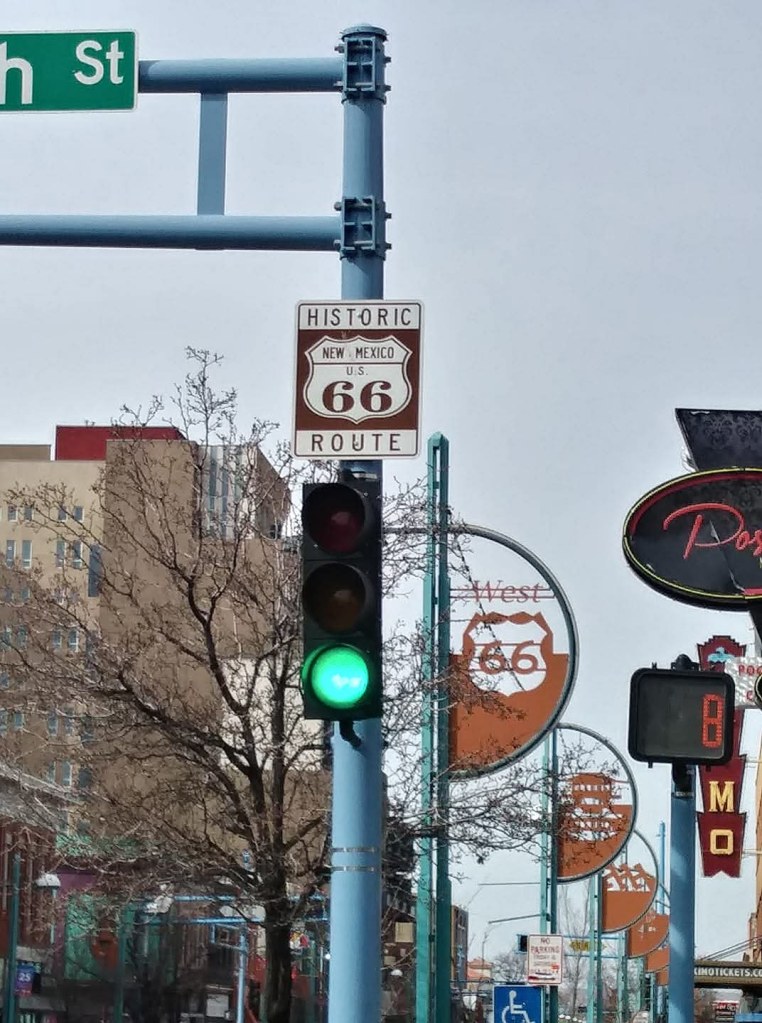
When the highway was originally designated in 1926, it ran north from Albuquerque through Tijeras Canyon to Santa Fe before heading west to rejoin the main alignment. In 1937 the road was rerouted to run directly west from Albuquerque to Gallup, bypassing Santa Fe entirely. The original alignment became the Historic Route 66 Santa Fe Loop. At Central and 4th, both alignments meet. Two versions of the same road, carrying the same designation, converging at one unremarkable intersection.
Most people drive through it without a second thought.
At night, though, the road is easier to see for what it is. Neon still clings to parts of Central. Old motels flicker against the dark. The line of the road runs straight through the city, and if you follow it long enough you can still feel the continuity, the sense that this street once connected Chicago to the Pacific and still, in a quieter way, does.
Route 66 sign in Grants
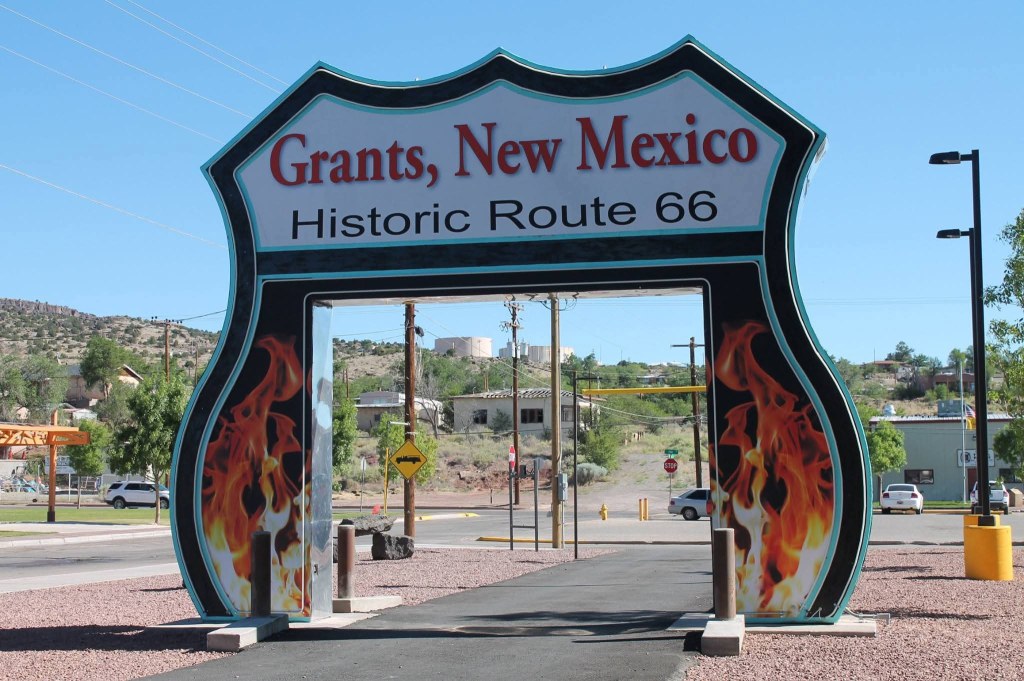
West of Albuquerque the road passed through Grants, another working town that wears its Route 66 history without making a performance of it. Its story is inseparable from the uranium boom that transformed the region in the 1950s. Paddy Martinez discovered uranium on nearby Haystack Mountain in 1950 and the town expanded almost overnight. The road that brought tourists brought miners too, and the landscape that looked empty to passing travelers was anything but.
Gallup is where the road’s relationship with Indigenous New Mexico becomes impossible to ignore. The Inter-Tribal Indian Ceremonial has been held here since 1922, four years before the road was designated. Route 66 brought Anglo tourists into contact with Navajo and Pueblo culture on a scale that had never happened before, and commodified both in ways the road’s boosters never examined carefully and the communities affected are still reckoning with. The neon strip in Gallup is one of the great surviving Route 66 streetscapes in the country. It is also a border town with all the complexity that implies, a crossroads that has been negotiating between cultures for longer than the road has existed.
Route 66 Casino West of Albuquerque
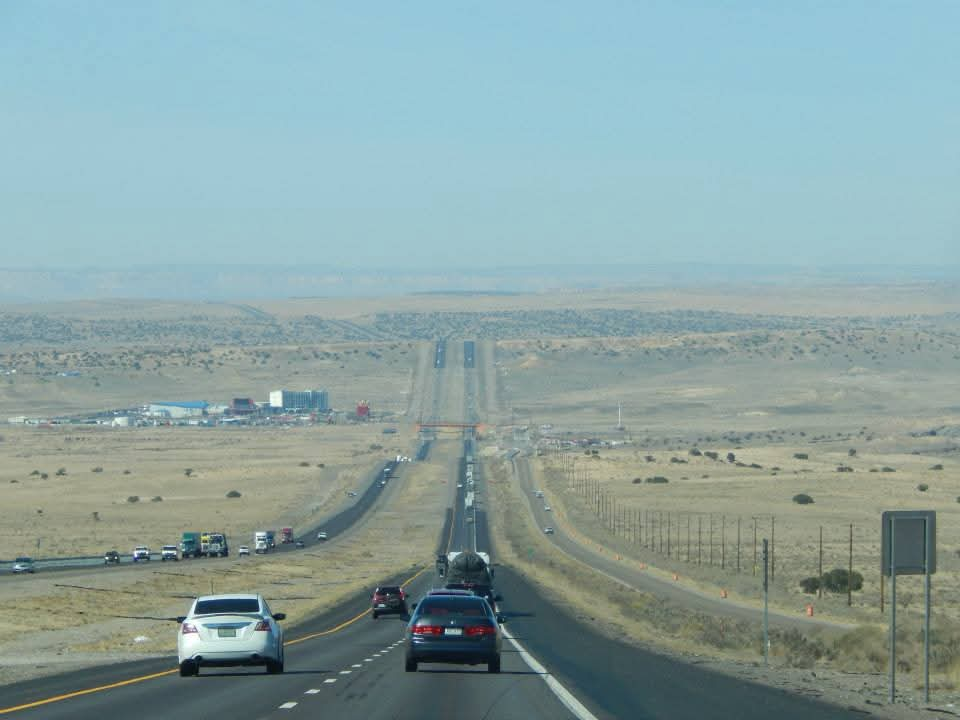
That complexity is the truth of Route 66 in New Mexico. The road brought commerce and connection and also displacement and erasure. It preserved towns and bypassed others. It introduced America to the Southwest and flattened the Southwest into a postcard for America’s consumption. Both things happened. Both things are still happening.
The centennial this November is worth celebrating and worth examining honestly.
Route 66 is one of nine historical threads running through my book in development, The Light Here Is Different, a hybrid photo-essay exploring New Mexico’s iconic and hidden places across six regions. The road runs through the book the way it runs through the state, connecting places and stories that would otherwise seem unrelated, reminding us that a road is never just a road. It is everything that traveled it, everything it made possible, and everything it left behind.
One hundred years on, New Mexico is still living with all of it, because a road is never just a road.
-
The Middle First: How Three Books Taught Me Who I Was
Shadows was the bones. Anywhere but Here was the lesson. The Space Between Songs is the story, finally told the way it was meant to be.
But the real story starts in the middle. It always does.I wrote the middle of Jessi’s story while my marriage was ending.
Twenty years. My children’s father. The ground coming out from under everything I had built my life around, and the particular terror of having to figure out who I was when the structure I had lived inside was gone. I did not sit down to write a survival story. I just wrote. I wrote what I understood, which was a woman moving through impossible country alone, making decisions under pressure, getting to the next thing because there was nothing else to do.The mountain. The cabin. The river. A woman who pulls herself out of the current, finds the bank, and keeps moving because stopping means dying and dying helps no one.
I was writing myself before I knew that was what I was doing.
That middle became Shadows. It was published, sent out into the world, true to exactly where I was when I wrote it. But I knew something was missing. Jessi survived what she needed to survive, but she was not fully herself yet. She was too much of who I was at the time. A woman looking for someone to hold things together. A woman waiting for rescue, even when she was the one still moving forward.
I could not fix that yet. I was not ready. I had not become who she needed to be.
So I wrote Michelle.
Anywhere but Here came before Shadows was even published. I wrote Michelle’s middle first too, the part I understood, the part I was living. When I was ready, when I had come far enough through my own story to understand how it held together, I went back and wrote her beginning and her ending.
Writing Michelle taught me something I didn’t know I needed to learn.
She showed me what it looks like when a woman acts. Decides. Moves through difficulty without waiting for permission or explanation, without needing someone to tell her she is going to be okay. Michelle is guarded in her own way, damaged in her own way, but she is never anything other than the agent of her own story.
I finished Anywhere but Here and understood Jessi for the first time.
Not the Jessi I had written. The Jessi she was always meant to be.I went back.
The middle was still there. The bones I had always believed in. The story still worked. But I rebuilt everything around it. I gave Jessi a full love story before I asked her to survive anything, because survival only matters when the reader knows what she is fighting to return to. I gave Ryan a life on the page instead of an absence. I gave the loss its weight and the return its meaning.
And I gave Jessi her strength.
Not the strength of someone who has been rescued. The strength of someone who pulls herself out of a river alone, who loads the rifles, who chooses to go to the person she loves because she has decided to go. The strength of someone who has been through the worst of it and come out knowing who she is.
I could write that woman because I had become her.
That is what I didn’t understand when I first wrote the middle of her story in the wreckage of my marriage. The survival was always there on the page. The wholeness had to wait until I found my own.
The pattern is clear to me now.
I write the middle first because the middle is where I am. The hard part. The survival part. The part that requires no faith in outcome because outcome is not visible yet. Then, when I am ready, when I have come far enough through my own story to believe in beginnings and endings, I go back and write the rest.
You can’t write a convincing beginning until you know the character survives. You can’t write a convincing ending until you believe in that kind of resolution yourself.
The middles came first because that is where I was. The beginnings and endings came when I was ready.
Three books. One conversation. The same truth, finally written with clarity.
And if you have ever found yourself in the middle of your own story, still trying to understand how it ends, you are not as lost as you think you are.
The Books Behind This Essay
Anywhere But Here
Available now
A novel about survival, choice, and coming home to yourself.The Space Between Songs
Coming Fall 2026
A reimagined and fully realized telling of Jessi’s story.Shadows
Early work, available for a limited time
The original version of this story, written from a place of survival before it was fully understood. -
What I Tell Them Before They Go
This week I have been watching my seniors. They are almost gone. There is a particular restlessness that settles into a classroom in late April. It is not loud and it does not interrupt much, but it is there in the drifting attention, in conversations that stretch a little longer than they should, in the way their eyes keep finding the door. Not rudely. Just pulled. I recognize it. Part of me wants to call them back, to tell them to sit down because we are not done yet, because there is still more I could give them. But I also remember what it felt like to be where they are, standing on the edge of something I could not yet see, ready to leave and so focused on what came next that the present moment felt like something to move through rather than inhabit.
So instead, I think about what I actually want to tell them before they walk across that stage. Not the usual things. Not you have your whole life ahead of you or follow your dreams. Those are kind, but they do not stay with you. They are too polished to hold onto. The real things are quieter than that. They take longer to understand.
Go somewhere that makes you feel small. Not small in a diminishing way, but small in the presence of something that does not need you. Stand at the edge of the Rio Grande Gorge and look down. Drive until the desert shifts and the sky opens wide enough that your problems feel the right size. Find something that existed long before you and will exist long after. We spend a lot of time telling young people they are meant for something extraordinary. Some of that is encouragement. Some of it quietly teaches you that an ordinary life is not enough. There is another way to understand yourself. Stand next to something vast and let it reset your sense of scale. You are not the center of everything. That is not a loss. It is a relief.
Write it down. Not for anyone else and not because you think you are a writer. Write it down because you will not remember this the way you think you will. You will remember that you graduated, that you were young, that everything was about to begin. You will not remember what it felt like to sit in a classroom in April, knowing everything was about to change and not quite being able to hold that knowledge. Memory keeps the outline and loses the texture. Write something that keeps the texture, the uncertainty, the contradictions, the parts you cannot explain yet. One day you will want to know who you were before the world started shaping you into someone else.
The place you grew up will always be part of your story. I know the urge to leave, to be from somewhere that carries weight the moment you say its name, to trade the high desert for somewhere that feels like it matters more. I understand that. I felt it too. But where you come from does not disappear when you leave. It shows up in the way you speak, in what you notice, in what you call beautiful. It follows you in ways you do not expect. You can leave and still carry it. The high desert is not something to outgrow. This light, this sky, this mix of cultures and contradictions, it is not something to apologize for. It is material. It is yours. Carry it on purpose. You do not have to choose between leaving and belonging. You can go and still come back. You can need more and still be grateful. Those things can exist at the same time.
I have been teaching long enough now that former students come back. They stand in the doorway for a moment, like they are not sure if they still belong there. They look older in a way that is hard to explain, quieter, more settled in some ways and less certain in others. We talk for a few minutes and then they leave again. I think about them afterward. I wonder what stayed with them and what slipped away. I wonder if any of it mattered. I think it did. I have to believe it did.
The day after graduation the classroom will be quiet. The desks empty. The whiteboard clean. There will be nothing left to do but sit in that quiet and feel the absence of them. I will miss them. I always do. And then, slowly, that feeling settles into something quieter, something that makes room for what comes next.
This is the last thing I would tell them. Life is not one straight path forward. It is made of beginnings. You begin when you walk across that stage. You begin again when something does not work, when you lose something, when you choose differently, when you try again. Beginning again sounds simple. It is not. It takes courage every time, not the kind you store up, but the kind you have to find over and over.
Go. And come back sometimes. And when you need to, begin again.
-
Major Book Announcement!!!

My book is now live on IngramSpark as well as Amazon and Books By! https://shop.ingramspark.com/b/084?params=R5iMBwxsQwxm6A6oEJIhRHx2dkx4S3XWlIXwhsW3QNr IngramSpark has it at a sale price for paperback if you use the link!
-
A Love Letter to New Mexico
Dear New Mexico
Foreword — The Light Here Is Different Shawn Graybeal-Sellers · April 2026
Dear New Mexico,
I don’t know exactly when you stopped being a place and became something closer to a presence in my life. Maybe it was the first time I noticed how your light doesn’t just fall. It lingers. Or the way your sky stretches so wide it makes everything else feel smaller, quieter, more honest.
In Albuquerque, you make yourself known in details.
In the South Valley, where cottonwoods lean over narrow roads and the air smells faintly of earth and water, even in the dry. In the early mornings along the bosque, when the river moves slow and steady and the world hasn’t quite decided what it’s going to be yet. In the fall, when the smell of roasting green chile drifts through neighborhoods and parking lots, sharp and warm and unmistakable, like a signal that something familiar is returning. In the sudden rush of wings overhead, geese cutting across the sky in long, uneven lines, their calls echoing in a way that feels both distant and close at the same time.
You are beautiful. There’s no denying that.
But that isn’t the whole truth of you.
You are Central Avenue after dark. Neon flickering over old motels that have seen better decades. You are tents tucked along the edges of the city, people carrying everything they own in a cart or a backpack, carving out space where there isn’t enough to give. You are the quiet, complicated reality of homelessness, visible, persistent, impossible to ignore if you’re willing to really look.
You are chain-link fences and yards worn down to dirt. You are heat that presses down in July and doesn’t apologize. You are the version of yourself people think they know from a distance, the one they saw on television, where everything feels like it’s one decision away from collapse.
They’re not entirely wrong.
There is struggle here. Addiction that cuts through families like weather. Poverty that outlasts good intentions. There are nights that stretch thin, where sirens carry farther than they ought to, where the line between getting by and falling apart feels too narrow to trust.
But that isn’t the whole truth either.
Because there’s the Frontier at midnight, full of students, families, night-shift workers, people who know each other without needing introductions. There are front yards where neighbors still talk across fences, where someone is always watching out, even if they don’t say it out loud. There are people who stay, not because it’s easy, but because it’s theirs.
You don’t offer ease.
You offer space. You offer honesty. You offer a kind of belonging that has to be earned.
There are ruins here that remind us how long people have been trying to make a life in this place, walls built by hands we’ll never name, standing in cottonwood groves at the foot of mountains that were old before any of us arrived. There are stories in the ground, of loss and resilience, of things taken and things held onto anyway. You carry all of it without trying to soften it.
And somehow, that’s what makes you feel real.
Because loving you isn’t about pretending you’re perfect. It’s about seeing all of it, the light and what it reveals, the grit and what it demands, and choosing you anyway.
Choosing the smell of chile in the fall.
Choosing the sound of geese overhead, reminding us that movement and return are part of the same story.
Choosing the quiet mornings in the bosque, when the cottonwoods hold the mist and the herons stand perfectly still in the shallows.
Choosing the long drives where the land looks empty until Shiprock rises from the flatlands and the desert reminds you what it’s been holding all along.
Choosing the way the Sandias catch the last light of the day and go pink, then amber, then a color that doesn’t have a name in English, even after everything else has gone dark.
You do not try to be anything other than what you are.
And because of that, you ask the same of me.
Love Always
Shawn Graybeal-Sellers has lived in New Mexico since December 1984. She is a historian, teacher, and writer based in Albuquerque. The Light Here Is Different is forthcoming.
-
The Soundtrack of Anywhere But Here
Every story has a soundtrack. For me, Anywhere But Here has always had music running underneath it. Songs that captured Michelle’s world, her pain, her decade of running, and the long road back to the people she never stopped loving.
I’ve been building this playlist in my head for years, adding songs as they found their way into the story. Some of them are obvious choices. Some surprised me. All of them feel true to Michelle, to the Calderons, and to the world of this book.
I’ve organized it the way the story moves. From Michelle’s early years, through the running, through the darkness, through the longing, and finally home.
Young Michelle (the early years) These are the songs of Michelle’s childhood. The pain of her home life and the warmth she found with the Calderon family. Hope and hurt living side by side.
- Storytime by Nightwish
- Better Life by Keith Urban
- Hope by Shinedown
- Because of You by Kelly Clarkson
- Unwell by Matchbox Twenty
- No Rain by Blind Melon
- If You Could Read My Mind by Gordon Lightfoot
- Weren’t For The Wind — Ella Langley
- I Can’t Stand to Leave You by Lucero
Running (Michelle on the road) For ten years Michelle builds a life defined by motion. These are her road songs. The ones playing as she follows the rodeo circuit from town to town, building a life that never stays still long enough to trap her.
- Long Road to Nowhere by Mickey and the Motorcars
- Amarillo By Morning by George Strait
- White Horse by Chris Stapleton
- Wicked Twisted Road by Reckless Kelly
- Searchlight by Shinedown
- Running on Empty by Jackson Browne
- Never Going Back Again by Fleetwood Mac
- Rodeo by Garth Brooks
- Fade Away by Breaking Benjamin
The darkness underneath Michelle’s life on the road looks like freedom. But underneath it is everything she’s running from. These songs live in that space.
- Sound of Silence by Disturbed
- So Cold by Breaking Benjamin
- Black by Smith & Myers
- Runaway Train by Soul Asylum
- Far Away by Nickelback
- Reckoning by Whiskey Myers
- Words by Skylar Grey
- Jolene by Ray LaMontagne
- Torn to Pieces by PopEvil
Longing and memory You can put distance between yourself and the people you love. You can’t stop carrying them. These are the songs of that carrying.
- The House That Built Me by Miranda Lambert
- The Dance by Garth Brooks
- Always On My Mind by Willie Nelson
- Sweet Baby James by James Taylor
- Elan by Nightwish
- Weatherbeaten Soul by Reckless Kelly
- Back to December by Taylor Swift
- Second Chance by Shinedown
Coming home Michelle comes back to Albuquerque because Sylvia needs her. She stays because she finally understands what she left behind. These are the songs of that reckoning.
- Say Something by Chris Stapleton and Justin Timberlake
- Until Then by Sully Erna
- Someday by OneRepublic
- Between the Raindrops by Lifehouse
- Crazy Faith by Alison Krauss and Union Station
- Home Sweet Home by Motley Crue
- Home by Daughtry
I built this playlist so you could listen while you read. Or after. Or before. However the music finds you.
Anywhere But Here is available now on Amazon, and Books By. I’d love to know which songs speak to you.
-
Press Release
ANYWHERE BUT HERE EXPLORES THE POWER OF CHOSEN FAMILY AND THE JOURNEY BACK TO BELONGING
Shawn Marie Graybeal Sellers delivers an emotionally rich novel that follows a young woman’s path through loss, identity, and the enduring pull of home. Alan J. Cohen
New York, NY, April 19, 2026 — In her compelling new novel, Anywhere But Here, Shawn Marie Graybeal Sellers presents a deeply human story about resilience, identity, and the meaning of home. This emotionally driven narrative captures the quiet struggles of growing up, the bonds that shape us, and the courage it takes to return to the past.
The story begins when fourteen year old Michelle Martinez experiences a life altering moment after a note passed in class exposes the hidden realities of her home life. This revelation sets off a chain of events that leads her into the welcoming orbit of the Calderon family, whose warmth and stability offer a stark contrast to what she has known. Over the course of a decade, Michelle’s life becomes defined by movement, distance, and the lingering emotional ties to the people she left behind.
Years later, Michelle is a photojournalist living on the road, following the rodeo circuit and avoiding anything that resembles permanence. Her carefully constructed distance is shattered when her best friend Sylvia goes missing. This crisis forces Michelle to return to Albuquerque, where she must confront not only the mystery surrounding Sylvia’s disappearance but also the relationships and unresolved emotions she thought she had escaped.
The inspiration behind Anywhere But Here reflects a powerful exploration of chosen family and the enduring impact of early experiences. Graybeal Sellers examines how the people who offer us love and stability can shape our identities, even when we try to leave them behind. The novel also highlights the tension between running from the past and the inevitable pull to face it.
This story resonates strongly with readers who are drawn to character driven narratives centered on emotional growth, personal struggle, and the search for belonging. It speaks to those who have experienced displacement, found connection in unexpected places, or grappled with the idea of what home truly means. The novel balances suspense and introspection, creating a reading experience that is both engaging and deeply reflective.
Shawn Marie Graybeal Sellers brings authenticity and emotional depth to her storytelling, crafting characters that feel real and lived in. Her ability to portray complex relationships and internal conflict positions her as a distinctive voice in contemporary fiction. Her work captures the nuances of human connection while exploring themes that are both timely and timeless.
Anywhere But Here invites readers to reflect on the meaning of family, the weight of memory, and the courage required to return to the place that knows you best. It is a powerful story about survival, connection, and the long road back to belonging.
The book is now available — secure your copy here: https://a.co/d/0bLV6D2T
For review copies, interview requests, or additional information, please contact:
Shawn Marie Graybeal Sellers Email: shawngraybealsellers@gmail.com

-
Anywhere But Here
-
Quarai: Where the Veil is Thin
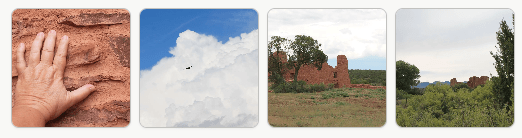
There are places in this world that exist outside of easy explanation. Places where the accumulated weight of human longing, labor, grief, and prayer has soaked into the earth itself, where time moves differently, where the boundary between what was and what is becomes permeable in ways that defy the rational mind. Quarai is such a place. Set quietly in the open expanse of central New Mexico, its red sandstone walls rising from the high desert scrub of the Manzano Mountain foothills, it is a site that resists being reduced to history alone. You can explain it. You can date it, categorize it, place it neatly within the narrative of Spanish colonization and Indigenous resilience. But standing there, inside those roofless walls with nothing overhead but the infinite blue of the New Mexico sky, that explanation feels not wrong but simply insufficient. Quarai is not just something that happened. It is something that remains.
The approach matters more than most visitors expect. The ruins do not announce themselves. They do not rise dramatically from a bare plain demanding attention. Coming in on foot through piñon and juniper, the smell of high desert sage filling the air, the sound of the ancient spring threading through the quiet, you pass through something before you arrive anywhere. The world narrows. The noise of ordinary life fades. Your body begins to understand, before your mind catches up, that you are entering different ground. And then through the brush and cottonwood the red sandstone walls appear, partially hidden, rising from the landscape the way something rooted rises, not imposed but grown, as though they have always been here and always will be. The Manzano Mountains hold the horizon behind them, faint and blue, ancient and indifferent. By the time you reach the ruins you are already moving differently. Slower. More deliberate. More awake.
Long before the Spanish arrived, Tiwa-speaking Pueblo people built a thriving community here, drawn by the rare reliable spring and sustained by a relationship with the land that required not domination but balance. Between water and drought, isolation and trade, the physical and the spiritual. The nearby salt flats connected Quarai to distant communities across the Southwest. Life here was not easy, but it was rooted, intentional, and woven through with ceremony and meaning. These were people who understood that the world was alive, that stones and water and sky were not backdrop but presence, not resource but relation. In the early 1600s that world was violently rearranged. Franciscan missionaries arrived carrying a different cosmology and the force of empire behind it, and with Pueblo labor, coerced and unrelenting, raised the massive church of La Purísima Concepción, its walls forty feet high and four feet thick, its sandstone the same deep red as the earth from which it was drawn. For a time the two worlds existed side by side, not fully merged and not fully separate, each maintaining its own ceremonies, its own relationship to the sacred. By the 1670s the balance shattered. Drought stripped the harvests. Raiders struck from the east. Disease moved silently through families and generations. The people of Quarai walked away, those who had survived, and the church they had built with their hands and their suffering was left to the sky and the wind and whatever had been present at that spring long before any human being had set stone upon stone.
Whatever that presence was, it did not leave with them.
Stepping into the nave is a different experience than approaching the ruins from the outside. The walls still hold the shape of the space, catching light and shadow in ways that feel less like accident than intention. The roofless opening above frames the sky, that specific saturated blue of the high desert at elevation that seems to vibrate slightly against warm stone, that seems to breathe. Your body still registers enclosure even as your eyes find nothing but open air above. It is both ruin and living structure, both absence and presence, both the thing that was and the thing that continues. A functioning sacred space is managed and contained, its energy channeled through liturgy and architecture and the schedule of devotion. But a roofless nave open to the sky is something altogether different. The boundary between interior and exterior dissolves. The space is consecrated but uncontrolled, held in a permanent threshold condition that every tradition across every culture recognizes as sacred in its own right. The liminal. The in-between. The place where ordinary categories loosen their grip.
This is where the phrase “the veil is thin” stops being metaphor and becomes description.
The concept appears across traditions so distant from one another that the convergence feels significant. Celtic Christianity spoke of thin places, locations where the membrane separating the human from the divine had worn nearly transparent. Indigenous traditions throughout the Americas have long understood certain sites as gathering points for spiritual power, places where the energy of the land and the accumulated ceremony of generations creates something that can be felt rather than merely known. Mystics across every faith lineage have described particular locations where the usual noise of selfhood quiets and something older and larger becomes briefly, undeniably present. These are not the same belief systems. But they are pointing toward the same experience. And Quarai produces that experience with a consistency that cannot be explained by landscape alone, however beautiful the landscape is.
Run your hand along the wall and what you feel is not simply texture. It is time. The uneven surface shaped by four centuries of weather, the slight irregularity of the mortar, the warmth the stone holds long after the sun has moved elsewhere. The red sandstone is not a fixed thing in light. It shifts through the hours, glowing amber in the early morning, going flat and ochre at midday, deepening toward brown under cloud shadow, warming from within on overcast days as if the color comes from inside the stone rather than from anything falling on it. To put your hand against that wall is to collapse distance in a way that nothing intellectual can accomplish. The structure stops being something to observe and becomes something to touch, something that receives your touch in return, something that was shaped by hands not so different from your own and that has been waiting, in whatever way stone waits, ever since.
The small things accumulate until they are not small. The shift of light across the nave floor. The movement of air through spaces where doors once stood. The distant shape of a hawk crossing a sky stacked with monsoon clouds, a single dark silhouette carrying something of the place’s solitude in its flight. Time loses its linearity here. The Pueblo community that once gathered in this valley, the hands that quarried and lifted and placed each stone, the prayers spoken in Tiwa and Spanish and perhaps in no language at all, the catastrophic departure and the long centuries of open sky afterward, all of it layers beneath your feet rather than receding behind you. The past at Quarai is not past in the way the past usually is. It is present. Not visible, not fully available to understanding, but undeniably, quietly, persistently present.
On one early visit a park ranger pointed upward without saying much. Tucked into the ancient stone near the top of the nave wall, almost perfectly hidden against the red sandstone, was a nest of baby owls. Small, still, watching with the ancient patience owls carry in their faces. The moment was brief and simple and it changed something. The oldest human structure for miles, raised with extraordinary labor and grief and devotion and the suffering of people who did not choose the task, had become a nursery. The owls were entirely at home. They were more at home than anyone had been in three hundred and fifty years. And there was something in that image, life nested inside ruins inside the desert inside an enormous indifferent sky, that felt like the place offering something. A sign in the old sense, not a supernatural message but a moment of sudden transparency, where the ordinary and the sacred briefly occupied the same space without apology.
Quarai is not a place that yields itself in a single visit. It deepens. Each return brings a different quality of light, a different season, a different interior weather, and the place meets each of these with something new. The familiarity does not diminish the experience but refines it, the way repeated reading of a great poem does not exhaust the poem but opens it further. The place becomes less something you visit and more something you are in ongoing conversation with, a conversation conducted largely in silence, in sensation, in the particular quality of attention the ruins seem to require and to reward.
What Quarai asks of those who enter it is not belief in any particular framework. It does not require that you bring a tradition or a theology or even a vocabulary for what you are experiencing. It only asks that you slow down enough to receive what is there. That you place your hand on the stone. That you lift your eyes to the open sky and allow the accumulated weight of this place, the longing and the labor, the ceremony and the catastrophe, the long silence and the persistent spring, to settle over you like the shadows the walls cast in the late afternoon light.
There is something here. Not something you can name exactly, and the naming would diminish it anyway. Something that the Tiwa people who lived here knew in their bones. Something the Franciscan friars, whatever their failures, were perhaps genuinely reaching toward when they raised these walls in the desert. Something the owls know without knowing, nested in the warm stone, indifferent to history and at home in the sacred.
The veil is thin here. You feel it. And you come back, again and again, because a place that does that to you is not a place you leave entirely. It travels with you. It waits for you. It is, in whatever way places can be, yours.
-
Mt. Taylor Sunset


Mt. Taylor from the Albuquerque foothills 4/9/2026 -
The Light Here Is Different — A New Mexico Project
Some mornings on the way to school I pull over and just look east.
The Sandia Mountains rise 10,000 feet above Albuquerque’s east side, a wall of pink granite that has watched every version of this city, from the first Pueblo settlements to the sprawling desert metropolis it is today. On clear days they turn watermelon pink at sunset and everyone stops what they’re doing. But the mornings I can’t stop thinking about are the cloudy ones — the days when overnight weather piles clouds against the western face of the mountain and they spill over the crest like waves breaking over a reef, slow and enormous and completely silent. The sun rises behind the ridge and the light finds the clouds from the other side, turning them pink, then orange, then a color that doesn’t have a name in English. The whole sky is moving. The whole sky is on fire.
And ten minutes later it’s gone, and I am standing in a parking lot in Albuquerque, New Mexico, and the day can wait.
This is what I have been trying to explain to people for forty years.
I have lived in New Mexico since December 1984. I came because of the Air Force. I stayed because the historian in me recognized that I was standing in one of the most layered and consequential landscapes in North America and I wasn’t done with it yet. Forty years later I am still not done.
The Light Here Is Different is the project that came out of that stubbornness.
It is a hybrid photo-essay book exploring New Mexico’s iconic and hidden places — from some of the oldest human sites on the continent to the landscapes of the atomic age. Organized across six regions, the project pairs seventy-four iconic locations with lesser-known counterparts, examining more than one hundred forty places through original photography and long-form essays. Nine thread essays trace the deeper forces that shaped the state — the Camino Real and the Pueblo Revolt, Route 66, the Long Walk, the Civil War campaign up the Rio Grande, the Manhattan Project, and the legacy of uranium mining on the lands of the people who lived above it.
Part travel narrative, part historical exploration, and part photographic record — it is a forty-year reckoning with a place that resists explanation and demands attention.
I’ll be sharing photographs, excerpts, and the story of making this book here and on Instagram as the work develops. Some of what you’ll see is already written. Much of it is still being discovered — on back roads, in archives, in conversations with people who know this state more deeply than I ever will.
The light here really is different. I’ve been trying to explain it for forty years.
This is my best attempt.

“It’s something that’s in the air, it’s different. The sky is different, the wind is different.” Georgia O’Keeffe
-
Anywhere But Here!
It’s Here. It’s Finally Here.
I’ve had stories in my head my whole life. Anywhere But Here has been one of them for about ten years.
It didn’t start at the beginning. The part I wrote first was somewhere in the middle — Michelle coming home to Albuquerque to find her missing friend Sylvia, and the stretch of the story that takes her to Gallup when the search comes up empty there. That section existed for years, waiting for the rest of the story to catch up to it.
The prologue existed too, in a way — as a handful of flashbacks scattered across early drafts. But it wasn’t until Christmas break that I sat down and wrote it as a true prologue, and something about doing that unlocked everything else. The full shape of the story finally became clear.
The rest came out over the last few months — fast, and with a lot of feeling. Michelle’s arc from beginning to end, the mystery at the center of it, the decade of motion and distance and the pull of home that never quite lets go.
Michelle, Sylvia, Bobby, the Calderons — they have lives that extend well beyond what made it onto the page. I know their backstories, their contradictions, the small details that never found their way into the book but shaped everything that did. That’s how I know they’re real. That’s how I know this story was worth the ten years it took to find its ending.
Anywhere But Here is set in Albuquerque’s North Valley, a place I love deeply — the cottonwoods, the acequias, the mountains at dusk. It’s a story about chosen family, survival, and the long road back to the place that always knew your name.
It’s available now on Amazon in paperback, hardcover, and ebook.
I’m so glad it’s finally out in the world. I hope it finds the readers it’s meant for.


